
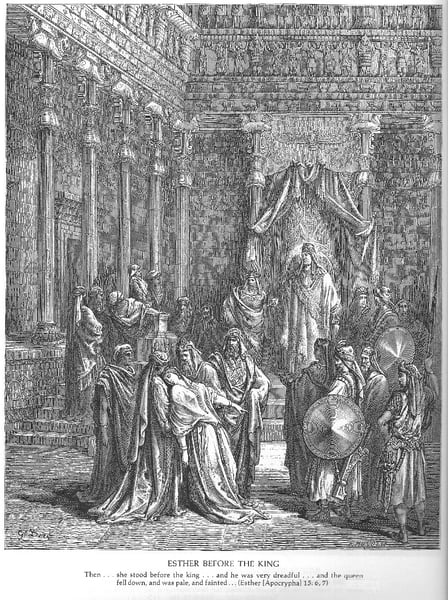
Gustave Dore sanatçısının Esther Before the King eseri hakkında uzman analizi
Tarz: Romanticism · Tür: religious painting
Expert Analysis of "Esther Before the King" by Gustave Doré
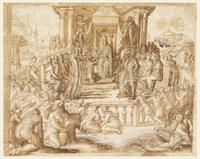
Gustave Doré’s Esther Before the King stands as a compelling fusion of Romanticism’s emotional intensity with the gravitas of religious painting, marking a significant moment in the artist’s shift from his celebrated illustration work to large-scale canvas compositions.
Romanticist Dramaticism
The painting exemplifies Romanticism’s hallmark theatricality, employing chiaroscuro and a charged, asymmetrical composition to heighten the biblical narrative’s psychological tension. Doré illuminates Esther’s pale, vulnerable figure against the shadowy, opulent court of King Ahasuerus, directing the viewer’s gaze to her delicate gesture—an appeal for mercy that hangs in suspense. The king’s elevated throne and the looming, half-visible courtiers amplify the power imbalance, while the flickering, almost supernatural light from an unseen source creates an aura of divine intervention, a Romantic trope that elevates personal faith over institutional authority.
Significance as Religious Painting
Though often remembered for his engraved masterpieces of Dante, Milton, and the Bible, Doré here translates the epic scope of his illustrations into painterly bravura. The work reimagines the Book of Esther not as a static historical tableau but as a moment of profound human crisis—Esther’s fear and courage are palpable, aligning Romantic religious painting with interior states of spiritual struggle. Doré’s brushwork, at once precise and atmospheric, imbues the courtly setting with a sense of fable-like urgency, challenging the era’s more academic religious paintings by prioritizing raw emotion over iconographic rigidity.
Legacy within Doré’s Oeuvre
This painting is significant because it demonstrates Doré’s ability to synthesize narrative grandeur with painterly expressiveness—a skill that made his illustrations of the Bible so influential in the 19th century. In Esther Before the King, the dense, almost spectral handling of light and shadow foreshadows Symbolist and early Expressionist sensibilities, while its focus on a solitary female figure facing monarchical power resonates with Romanticism’s fascination with the individual’s moral stand. The work thus occupies a pivotal place in Doré’s career, bridging his graphic narrative genius with his ambitions as a painter of epic, emotionally charged sacred subjects.
Görsel olarak benzer
İlişkili kompozisyon ve renk paletine sahip 20 eser
Daniel Confounds the Priests of Bel
Gustave Dore
The Justification of Susanna
Gustave Dore
David Mourns the Death of Absalom
Gustave Dore
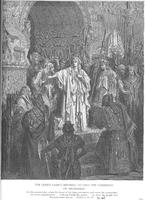
Queen Vashti Refuses to Obey Ahasuerus' Command
Gustave Dore
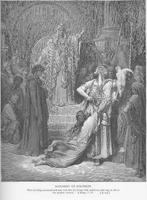
The Judgment of Solomon
Gustave Dore
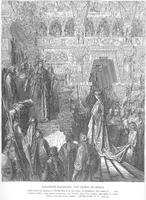
Solomon Receives the Queen of Sheba
Gustave Dore
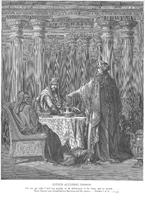
Esther Accuses Haman
Gustave Dore
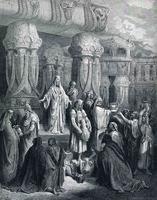
Cyrus Restores the Vessels of the Temple
Gustave Dore
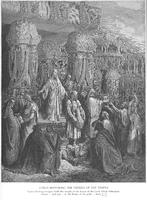
Cyrus Restoring the Vessels of the Temple
Gustave Dore
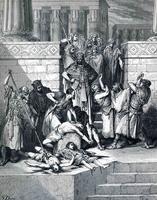
Slaughter of the Sons of Zedekiah before their Father
Gustave Dore
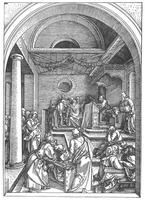
Christ among the Doctors in the Temple
Albrecht Durer
Torture of Tharacus, Probus, and Adronicus, Tarsus, AD 290
Jan Luyken
The Courage of a Mother
Gustave Dore
Saul Attempts to Kill David
Gustave Dore
Daniel Interpreting the Writing on the Wall
Gustave Dore
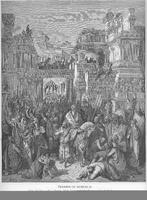
The Triumph of Mordecai
Gustave Dore
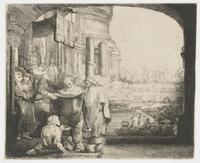
Peter and John healing the cripple at the gate of the Temple
Rembrandt
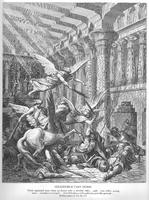
Heliodorus Is Cast Down
Gustave Dore
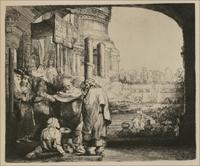
St. Peter and St. John at the Entrance to the Temple
Rembrandt
Allegory in Honor of Ranuccio Farnese
Francesco de' Rossi (Francesco Salviati), "Cecchino"