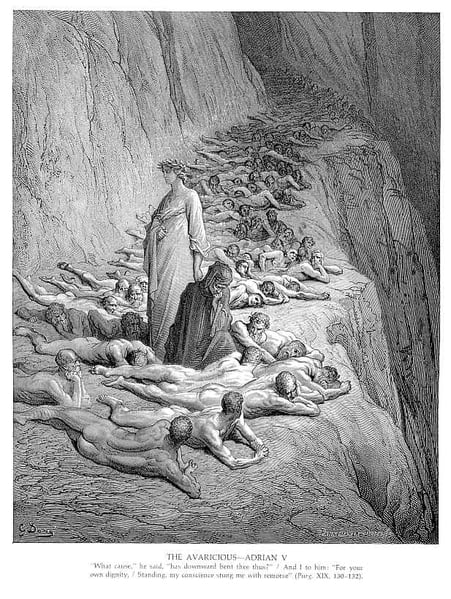
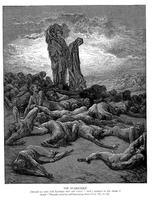
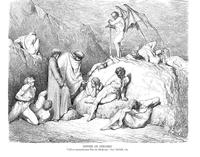
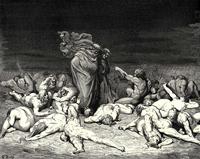
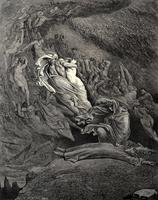
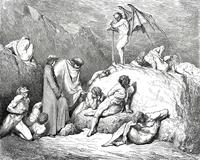
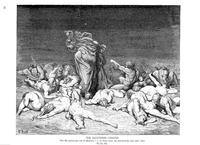
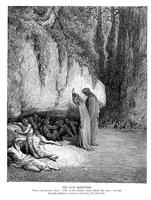
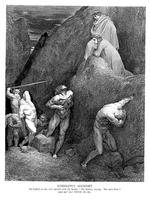
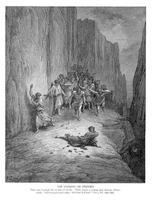
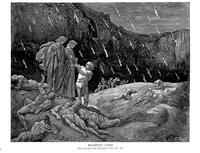
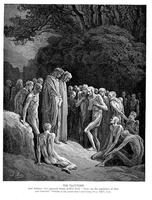
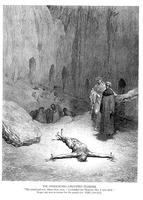
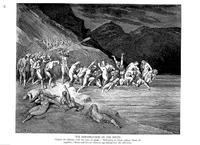
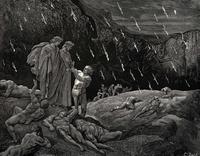
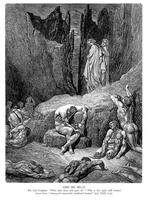
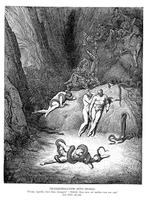
As an expert art historian, I can analyze "Dante and Pope Adrian V" by Gustave Doré based solely on the provided structured facts: it is a Romanticism-style illustration.
Significance within Romanticism and Illustration:
This work exemplifies the Romantic era’s deep engagement with literary and historical themes, specifically Dante’s Divine Comedy. As an illustration, Doré’s piece does not simply depict a scene but amplifies the emotional and moral weight of the text, a core Romantic goal. The Romantic style here is significant for its embrace of the sublime—the overwhelming, often awe-inspiring combination of the grand, the dark, and the spiritual. Doré’s treatment of the encounter between Dante and Pope Adrian V, set in Purgatory, would have used dramatic contrasts of light and shadow (chiaroscuro) to evoke the penitential atmosphere and the tension between earthly authority and divine redemption. The illustration genre allowed Romantic artists like Doré to reach a broad audience, making profound literary and philosophical ideas visually accessible. His work on Dante remains a landmark of Romantic book illustration, demonstrating how the style could transform a narrative into a powerful, emotional visual experience that transcends mere text.