
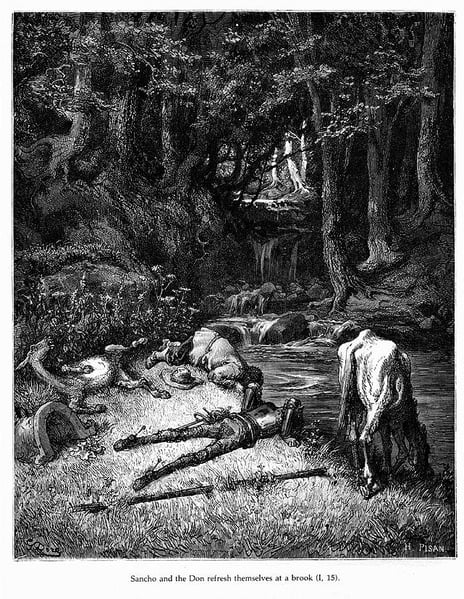
Analisi esperta di Don Quixote di Gustave Dore
Stile: Romanticism · Genere: illustration
Expert Analysis of "Don Quixote" by Gustave Doré
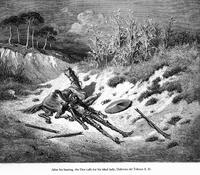
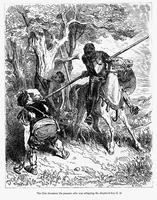
As an illustration within the Romantic movement, Gustave Doré’s Don Quixote stands as a vivid embodiment of the era’s core preoccupations: individualism, emotional intensity, and the collision between idealistic dreams and harsh reality. Doré’s interpretation transforms the literary figure into a visual archetype of Romantic heroism—a solitary, noble soul driven by an unyielding imagination despite the absurdity of his quest.
Significance within Romanticism:
Romanticism prized the dramatic, the sublime, and the irrational—qualities that Doré captures through his masterful use of chiaroscuro and dynamic composition. In this illustration, the gaunt, elongated figure of Quixote is rendered with exaggerated, almost tortured contours, emphasizing his inner turmoil and frail humanity. The stark contrasts of light and shadow not only heighten the scene’s theatricality but also symbolize the tension between Quixote’s luminous ideals and the encroaching darkness of reality. This interplay is quintessentially Romantic: it elevates subjectivity and feeling over objective representation.
Significance as an Illustration:
Doré’s work for Don Quixote is among the most celebrated of all literary illustrations. By fusing narrative clarity with atmospheric depth, he does not merely depict the text but amplifies its emotional and philosophical resonance. His illustrations became definitive visual companions to Cervantes’ novel, shaping how generations imagined the knight-errant. In this specific piece, Doré captures the pathos and grandeur of Quixote’s quest—his gaunt face, the improvised armor, the barren landscape—all reinforcing the Romantic notion of the artist as a visionary who sees beyond the mundane.
Why It Endures:
Doré’s Don Quixote remains significant because it synthesizes the Romantic spirit with the illustrative tradition, turning a literary character into an icon of imaginative perseverance. The image resonates as a poignant meditation on the power of belief, the tragedy of delusion, and the sublime beauty of a dreamer’s resolve—themes that lie at the very heart of Romanticism.
Visivamente simili
20 opere con composizione e palette affini
Don Quixote
Gustave Dore
Don Quixote
Gustave Dore
Don Quixote's Moralising on Ingratitude
Gustave Dore
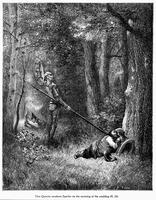
Don Quixote
Gustave Dore
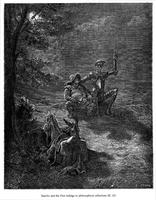
Don Quixote
Gustave Dore
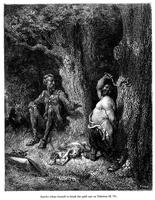
Don Quixote
Gustave Dore
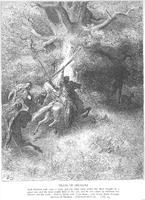
The Death of Absalom
Gustave Dore
Ruins and Figures
Paul Bril
The Sibyls in the Church of St. Our Lady of Peace
Giovanni Battista Piranesi
Idylls of the King
Gustave Dore
Don Quixote and Sancho Pansa Having a Rest under a Tree
Honore Daumier
Don Quixote
Gustave Dore
Buonconte Da Montefeltro
Gustave Dore
The death of Laras
Eugene Delacroix
Don Quixote
Gustave Dore
Idylls of the King
Gustave Dore
Donkeyskin
Gustave Dore
Landscape with Cows and Wildfowlers
Peter Paul Rubens
Don Quixote
Gustave Dore
Don Quixote
Gustave Dore