
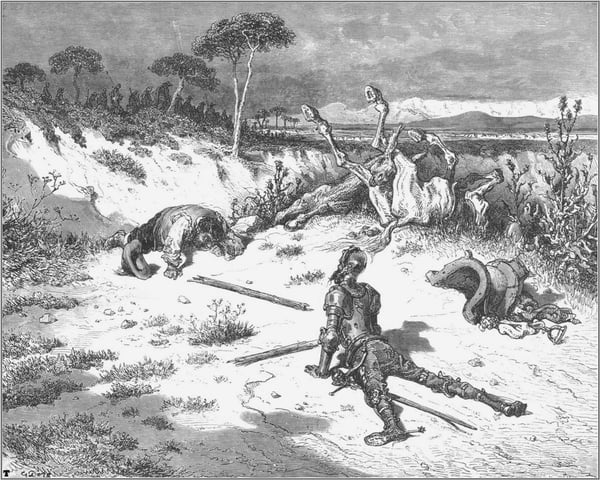
Analisi esperta di Don Quixote's Moralising on Ingratitude di Gustave Dore
Stile: Romanticism · Genere: illustration
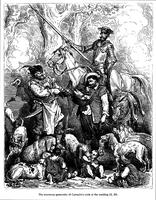
Analysis of "Don Quixote's Moralising on Ingratitude" by Gustave Doré
Style: Romanticism
As a Romantic illustration, this work channels the movement’s core fascination with emotion, individualism, and the sublime. Doré’s treatment of Don Quixote—a figure of noble but impractical idealism—perfectly embodies Romanticism’s celebration of the visionary outsider. The scene likely contrasts the knight’s moral fervor with a barren, dramatic landscape or shadowy interior, using stark chiaroscuro to heighten the psychological intensity. The emphasis on personal conscience and the tension between illusion and reality aligns with Romanticism’s rejection of rigid neoclassical order.
Genre: Illustration
Doré’s genius as an illustrator lies in his ability to amplify a literary text while creating a standalone visual narrative. This piece is part of his renowned series for Cervantes’ Don Quixote, a project that defined how generations would visualize the novel. Doré’s illustrations are not mere decorations; they interpret the story’s moral and emotional depths. In Don Quixote’s Moralising on Ingratitude, the composition likely focuses on the knight’s expressive posture and gesture, making didactic speech palpable through heroic scale and dramatic lighting. The illustration genre here demonstrates how Romanticism could transform a book plate into a profound meditation on human folly and integrity.
Significance
This work is significant because it epitomizes Doré’s mastery of marrying literary narrative with Romantic visual vocabulary. It captures the quintessential Romantic paradox: a flawed, deluded hero whose moral clarity outshines the cynical world around him. Doré’s ability to evoke both the comedy and tragedy of Don Quixote’s sermon on ingratitude—a theme that resonates with Romanticism’s ideal of the misunderstood artist/martyr—elevates the illustration from mere accompaniment to a powerful artistic statement in its own right. It remains a touchstone for how Romanticism shaped book illustration, embedding deep psychological and ethical complexity into a popular medium.
Museum / Gallery
Visivamente simili
20 opere con composizione e palette affini
Don Quixote
Gustave Dore
Don Quixote
Gustave Dore
Don Quixote
Gustave Dore
Don Quixote
Gustave Dore
Don Quixote
Gustave Dore
Don Quixote
Gustave Dore
Don Quixote
Gustave Dore
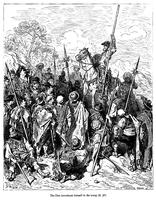
Don Quixote
Gustave Dore
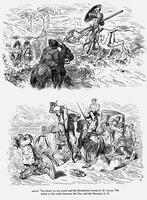
Don Quixote
Gustave Dore
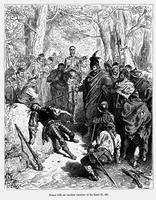
Don Quixote
Gustave Dore
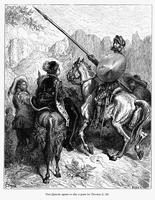
Don Quixote
Gustave Dore
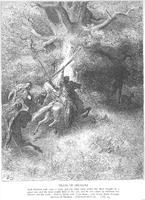
The Death of Absalom
Gustave Dore
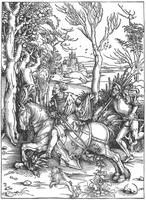
The Knight and the Landsknecht
Albrecht Durer
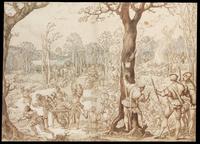
Sharing out the Game
Bernard Van Orley
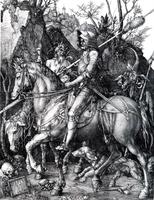
The Knight, Death and the Devil
Albrecht Durer
Don Quixote
Gustave Dore
Donkeyskin
Gustave Dore
Don Quixote
Gustave Dore
Don Quixote
Gustave Dore
Don Quixote
Gustave Dore