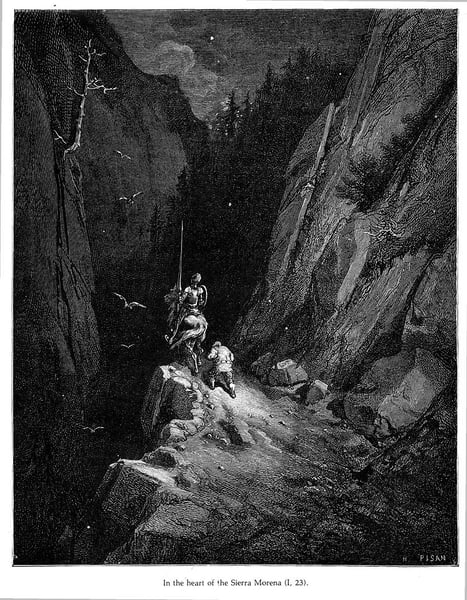
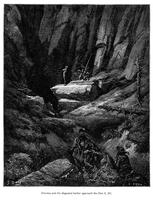
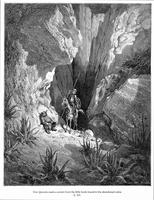
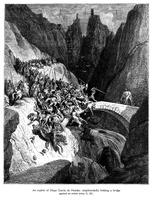
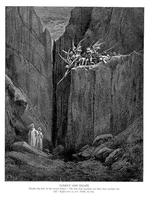
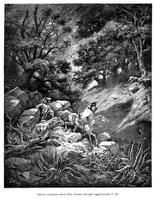
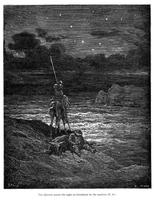
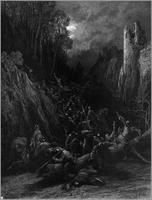
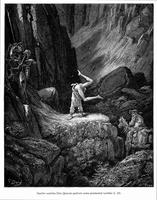
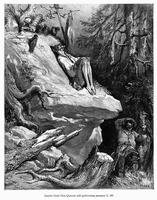
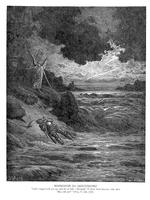
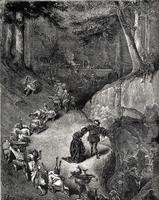
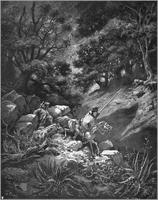
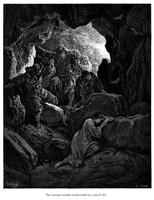
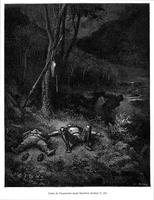
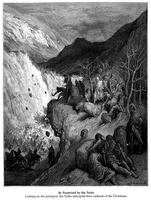
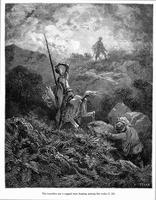
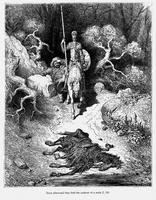
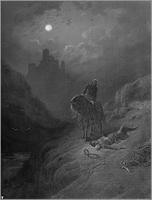
Gustave Doré’s Don Quixote is a masterful example of Romanticism within the illustration genre. The work’s significance lies in its ability to distill the Romantic preoccupation with heroic individualism, emotional intensity, and the tension between imagination and reality. Doré uses dramatic chiaroscuro and a dynamic, often swirling composition to depict Don Quixote not merely as a deluded old man but as a tragic, noble figure—a champion of impossible ideals. The illustration genre allows Doré to transform Cervantes’ literary narrative into a vivid, standalone visual drama, capturing the very essence of Romanticism’s fascination with the sublime and the irrational. Through this piece, Doré elevates book illustration to an art form in its own right, creating an iconic vision of Quixote that has shaped the character’s visual legacy ever since.