
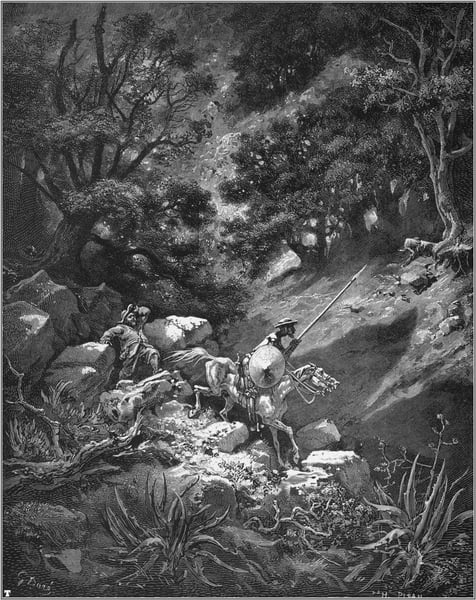
Gustave Dore sanatçısının Don Quixote eseri hakkında uzman analizi
Tarz: Romanticism · Tür: illustration
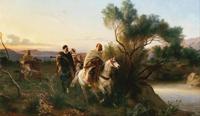
This analysis is based solely on the provided structured facts: Artwork: "Don Quixote" by Gustave Dore, Style: Romanticism, Genre: illustration.
Expert Analysis: "Don Quixote" by Gustave Doré
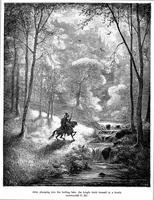
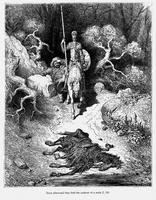
Gustave Doré’s illustrations for Don Quixote represent a pinnacle of Romantic-era book illustration, transforming a literary masterpiece into a deeply visual, emotional experience. While the specific scene is not named, Doré’s body of work for Cervantes’ novel is significant for three key reasons that align perfectly with the Romantic spirit:
-
Dramatization of the Sublime and the Ridiculous: Romanticism prized intense emotion, the sublime in nature, and the heroic struggle of the individual. Doré captures the tragicomic core of Don Quixote by rendering the knight’s delusions with epic grandeur. Windmills become monstrous giants, dilapidated inns become castles, and the thin, aging Quixote is a figure of both pathos and visionary nobility. This duality—the tension between lofty idealism and harsh reality—is a hallmark of Romantic irony.
-
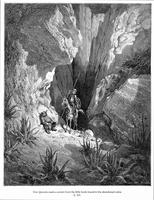
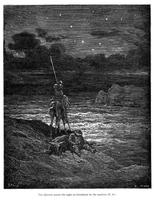
Theatricality and Atmospheric Lighting: Doré’s masterful use of chiaroscuro (strong contrasts between light and dark) and intricate cross-hatching creates a sense of swirling motion and psychological depth. The illustrations are not mere accompaniments to text; they are standalone dramas. A typical Doré Don Quixote plate might show the knight silhouetted against a vast, stormy sky or emerging from shadowy caves, emphasizing his solitary quest and the internal landscape of his imagination. This aligns with Romanticism’s focus on the individual’s subjective experience.
-
Elevation of Illustration as a Fine Art: In the 19th century, book illustration was often considered a craft. Doré, however, infused it with the same ambition as history painting. His Don Quixote engravings (over 370 in total for the complete edition) established the visual archetype for the characters—Quixote’s gaunt, heroic posture and Sancho Panza’s rotund, earthbound form became definitive. By combining narrative clarity with the expressive, emotional vocabulary of Romanticism, Doré proved that illustration could achieve the same artistic and literary significance as the text it accompanies.
In essence, Doré’s Don Quixote is a key work because it synthesizes Romanticism’s core preoccupations—the power of imagination, the heroic individual’s conflict with the mundane, and the sublime potential of everyday drama—into a visual language that remains the most iconic interpretation of Cervantes’ novel.
Görsel olarak benzer
İlişkili kompozisyon ve renk paletine sahip 20 eser
Don Quixote
Gustave Dore
Don Quixote
Gustave Dore
Don Quixote
Gustave Dore
Fort Edmonton
Kent Monkman
Idylls of the King
Gustave Dore
The Death of Absalom
Gustave Dore
Deer hunting
Francesco Guardi
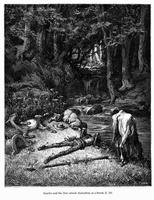
Don Quixote
Gustave Dore
The death of Laras
Eugene Delacroix
Milenci (setkání V Lese)
Maximilian Pirner
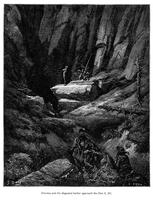
Don Quixote
Gustave Dore
Don Quixote
Gustave Dore
The horse has gone
Giorgio de Chirico
Idylls of the King
Gustave Dore
Don Quixote
Gustave Dore
Don Quixote
Gustave Dore
The Stranglers
Charles M. Russell
Pesants Returning from Market
Thomas Gainsborough
Don Quixote
Gustave Dore
The Arab Scouts
Henri Felix Emmanuel Philippoteaux