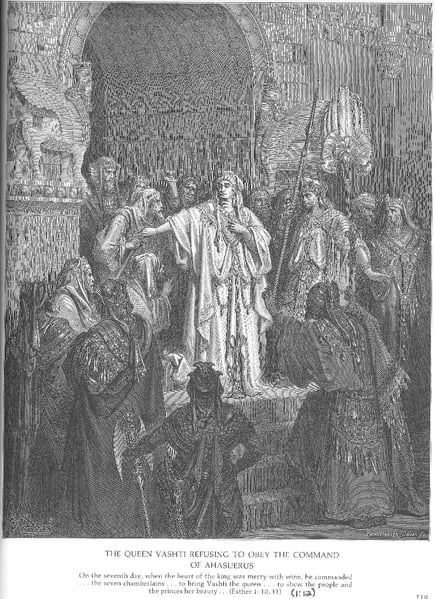
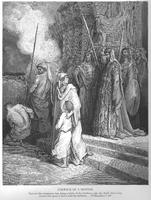
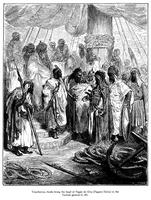
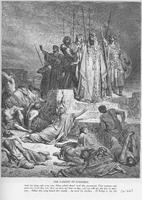
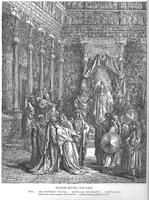
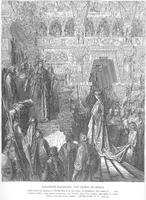
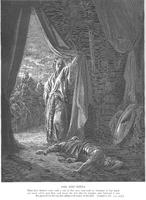
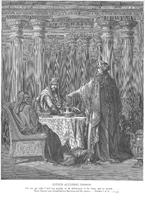
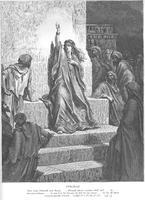
Gustave Doré’s Queen Vashti Refuses to Obey Ahasuerus’ Command is a striking example of Romantic religious painting. The work captures the pivotal biblical moment when Queen Vashti defies King Ahasuerus’ order to display her beauty before his court, a scene charged with tension and moral drama.
Significant within the Romantic style, Doré emphasizes raw emotion and individual will over classical restraint. Vashti’s refusal is depicted not as mere disobedience but as a defiant assertion of personal dignity—a theme Romanticism frequently exalted. The composition likely employs dramatic chiaroscuro and dynamic gestures (typical of Doré’s illustrative intensity) to heighten the psychological conflict between the queen’s serene resistance and the king’s indignant authority.
As a religious painting, it transcends simple illustration by foregrounding a human, ethical struggle rather than a conventional divine miracle, reflecting Romanticism’s shift toward subjective experience and the sublime in biblical narrative. Doré’s ability to imbue a well-known story with palpable emotional force and theatrical grandeur makes this work a notable contribution both to his oeuvre and to Romantic religious art.