
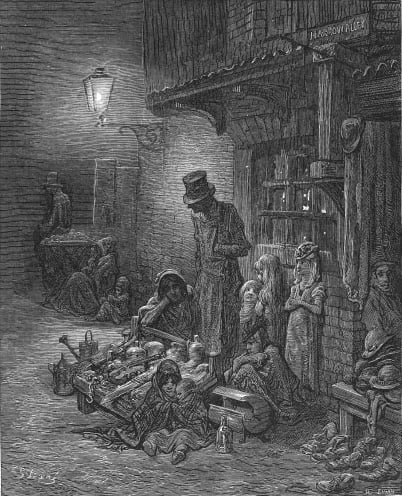
Expertenanalyse zu Gustave Dores Houndsditch
Stil: Romanticism · Genre: genre painting
Expert Analysis of "Houndsditch" by Gustave Doré
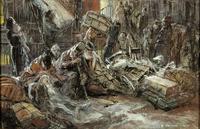
Gustave Doré's "Houndsditch" is a significant example of Romanticism operating within the genre painting tradition. While genre painting typically documents everyday life, Doré infuses this urban street scene with the emotional intensity and dramatic vision central to the Romantic movement.
Significance within Romanticism: The work exemplifies Romanticism’s turn toward the sublime and the picturesque found in modern urban experience. Rather than idealizing rural life, Doré captures the gritty, crowded reality of 19th-century London’s Houndsditch—a district known for poverty and commerce. His treatment transforms a mundane street into a stage for human struggle, evoking melancholy, awe, and social empathy. This aligns with Romanticism’s fascination with the darker, more raw aspects of human existence.
Significance as Genre Painting: Doré elevates genre painting beyond simple documentation by using dramatic chiaroscuro and crowded, dynamic compositions to heighten emotional resonance. The figures are not merely types but carriers of a collective mood—suggesting isolation and resilience within the masses. This merges the Romantic obsession with individual emotion and social observation, making "Houndsditch" a precursor to later Realist and social-protest art.
In essence, "Houndsditch" is significant because it demonstrates how Romantic genre painting could confront the anxieties of the industrial age while retaining the movement’s core focus on emotional truth and the power of the human condition.
Visuell ähnlich
20 Werke mit ähnlicher Komposition und Farbpalette
Man on the street
Théodore Géricault
The funeral of a poor quarter of Paris
Vasily Perov
The Family
Adriaen van Ostade
Market in Jaffa (fragment)
Gustav Bauernfeind
The Breakfast
Adriaen van Ostade
Le Bon Samaritain
Maximilien Luce
Don Quixote
Gustave Dore
A Harlot's Progress, plate 5
William Hogarth
The Infant (The Sick Child)
Jean-Francois Millet
Times of the Day, Noon
William Hogarth
The Family
Adriaen van Ostade
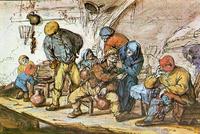
Scene in the Tavern
Adriaen van Ostade
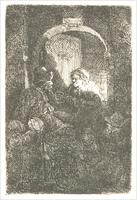
The Schoolmaster
Rembrandt
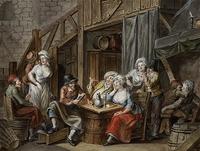
Interior Dunha Taberna
Henri Regnault
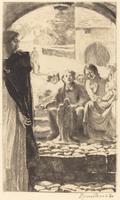
Pierre Copies the Virgin from the Portal of the Church of Marly
Paul-Albert Besnard
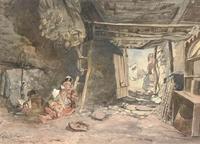
Interior of a fisherman's cabin, Galway
Alfred Downing Fripp
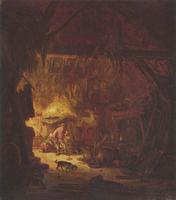
Interior of a Peasant House
Isaac van Ostade
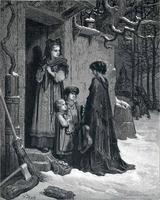
The grasshopper and the ant
Gustave Dore
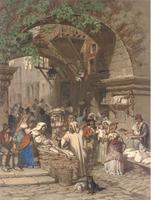
Portico of Octavia, St. Angelo in Pescheria, Rome, Italy
Carl Haag
Eviction (Lower East Side)
Everett Shinn