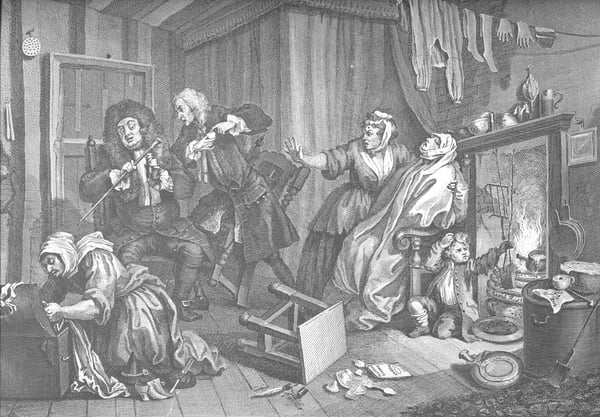
Expert analysis of William Hogarth’s A Harlot's Progress, plate 5
Style: Rococo · Genre: genre painting
As an expert art historian, I will analyze "A Harlot's Progress, plate 5" by William Hogarth based solely on the provided facts—Rococo style and genre painting—to explain the work’s significance within its period.
While the frivolous, decorative elegance of Rococo typically glorified aristocratic pleasures and pastoral idylls, Hogarth radically subverts this style here. The genre painting format (scenes of everyday life) is used not for charm but for brutal moral instruction. Plate 5 depicts the titular harlot, Moll Hackabout, on her deathbed from syphilis, surrounded by quarreling doctors and a thieving maid. The Rococo elements—the ornate wallpaper, the curved forms of the bed, and the delicate, flowing lines of the characters’ clothing—create a jarring contrast with the grim, squalid reality. This dissonance is the key to its significance: Hogarth weaponizes the Rococo aesthetic to expose the hollowness of fashionable society. The elegant bric-a-brac and finery that once symbolized luxury now serve as a backdrop to decay and moral collapse.
The work is significant as a pioneering narrative genre painting—a sequential "modern moral subject." It uses the Rococo’s emphasis on detailed, playful surfaces to deliver a sharp, didactic satire. By placing a tragic, realistic downfall within a decorative framework, Hogarth critiques the very society that produced Rococo art, transforming a style of pleasure into a tool for social commentary. This plate, part of a larger series, marks a crucial moment where genre painting evolves from simple depiction of daily life into a sophisticated vehicle for moral and social criticism.
Visually similar
20 works with related composition and palette
Strolling Actresses Dressing in Barn
William Hogarth
A Harlot's Progress, plate 3
William Hogarth
Dance at the Inn
Adriaen van Ostade
A Harlot's Progress, plate 4
William Hogarth
A Harlot's Progress, plate 6
William Hogarth
Spoiled children
Enrico Nardi
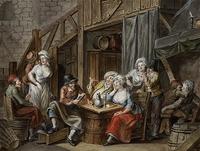
Interior Dunha Taberna
Henri Regnault
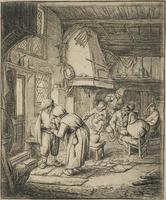
The Peasant Settling His Debt
Adriaen van Ostade
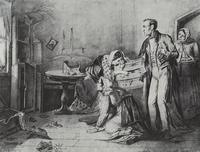
Burglary at Easter Eve
Vasily Perov
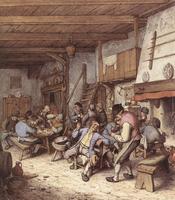
Tavern Interior
Adriaen van Ostade
The Breakfast
Adriaen van Ostade
Don Quixote
Gustave Dore
Cruelty in perfection
William Hogarth
Peasants Dancing in a Tavern
Adriaen van Ostade
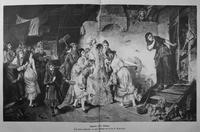
Die Gartenlaube (the Garden Arbor)
Toby Edward Rosenthal
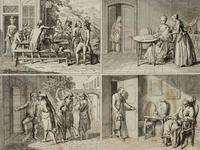
The Imprudence of the Second Youth, Plate 51
Daniel Chodowiecki
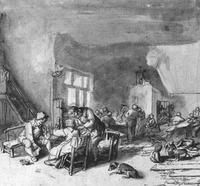
Interior of an Inn
Adriaen van Ostade
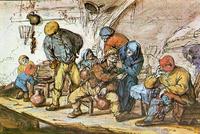
Scene in the Tavern
Adriaen van Ostade
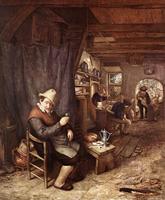
Drinking Peasant in an Inn
Adriaen van Ostade
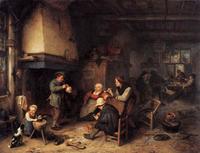
Peasants in an Interior
Adriaen van Ostade