
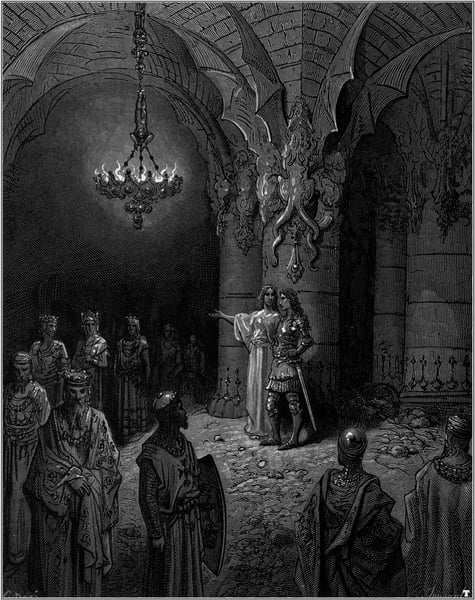
Gustave Dore sanatçısının Orlando Furioso eseri hakkında uzman analizi
Tarz: Romanticism · Tür: illustration
Expert Art Historical Analysis: Orlando Furioso (Gustave Doré)
Context and Significance
Gustave Doré’s illustrations for Ludovico Ariosto’s epic poem Orlando Furioso (first published in 1516, with Doré’s illustrated edition appearing in 1879) stand as a towering achievement in the Romantic movement’s visual interpretation of literature. While Doré is often associated with the Romantic fascination with the sublime, the grotesque, and the heroic, his work on Orlando Furioso exemplifies the period’s deep engagement with medieval and Renaissance chivalric romance—filtered through a 19th-century sensibility that prized emotional intensity, dramatic chiaroscuro, and intricate detail.
What Makes It Significant Within Romanticism
Doré’s illustrations for Orlando Furioso are a masterful synthesis of Romanticism’s core tenets: the celebration of individual passion, the awe of nature’s power, and the tension between reason and madness.
- Emotional Extremity and Madness: The poem’s central theme—the hero Orlando’s descent into insanity after being spurned by the enchantress Angelica—is given visceral form in Doré’s imagery. His engravings capture the frenzied, almost hallucinatory quality of Orlando’s rage, using swirling lines, stark black-and-white contrasts, and exaggerated gestures. This aligns with Romanticism’s fascination with the irrational, the dream-like, and the psychological edge of experience.
- The Sublime and the Fantastic: Doré transforms Ariosto’s fantastical elements—flying hippogryphs, enchanted islands, and monstrous creatures—into sublime spectacles. His landscapes dwarf human figures, evoking the Romantic sense of nature as overwhelming and indifferent. The dramatic lighting (often from a single, unseen source) heightens the mystery and grandeur, making the viewer feel both the allure and the terror of the unknown.
- Narrative Density: Unlike mere decorative illustration, Doré’s images function as independent interpretations. Each plate compresses multiple narrative moments into a single, dynamic scene, forcing the eye to navigate a cascade of action. This complexity reflects Romanticism’s preference for layered, allusive storytelling over simple clarity.
Technical and Generative Influence
Doré’s Orlando Furioso engravings are also significant for their technical bravura. Working primarily in wood engraving, he achieved an unprecedented range of tonal gradation—from velvety blacks to delicate, hair-thin lines—that gave his illustrations the atmospheric depth of paintings. This technical mastery allowed him to render both the delicate foliage of a magical forest and the chaotic fury of a battle with equal precision.
Moreover, Doré’s illustrations shaped how 19th-century audiences imagined the Renaissance epic. He revitalized Ariosto’s work for a Victorian readership, blending Romantic drama with a Pre-Raphaelite attention to ornate detail. His Orlando Furioso remains one of the most definitive visual companions to the poem, influencing countless fantasy artists and filmmakers through its fusion of chivalric romance with dark, psychological undercurrents.
Conclusion
Doré’s Orlando Furioso is a landmark in Romantic illustration because it does not simply depict a story—it amplifies its emotional and symbolic stakes. By marrying the literary tradition of Ariosto with the visual language of Romanticism—its chiaroscuro, its sublime landscapes, its embrace of madness and marvel—Doré created a work that stands as both a faithful interpretation and a bold artistic statement. It exemplifies how illustration, when elevated by Romantic ideals, becomes a distinct and powerful art form, capable of rivaling painting in its expressive depth and narrative force.
Görsel olarak benzer
İlişkili kompozisyon ve renk paletine sahip 20 eser
The Sleeping Beauty
Richard Doyle
The Emperor Alexius IV Poisoned and Strangled by Mourzoufle
Gustave Dore
Slaughter of the Sons of Zedekiah before their Father
Gustave Dore
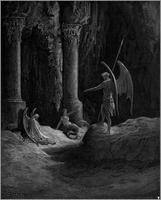
Paradise Lost
Gustave Dore
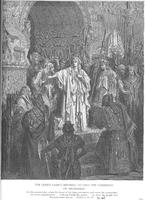
Queen Vashti Refuses to Obey Ahasuerus' Command
Gustave Dore
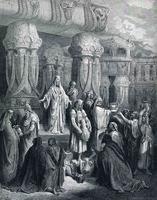
Cyrus Restores the Vessels of the Temple
Gustave Dore
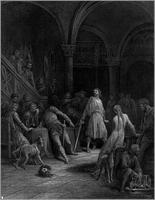
Idylls of the King
Gustave Dore
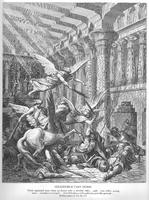
Heliodorus Is Cast Down
Gustave Dore
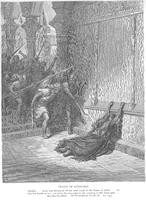
The Death of Athaliah
Gustave Dore
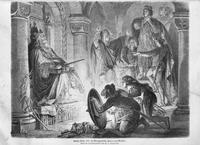
Kaiser Otto III im Grabgewölbe Karl’s des Großen
Wilhelm von Kaulbach
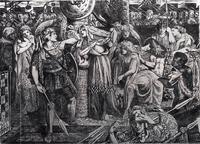
Cassandra
Dante Gabriel Rossetti
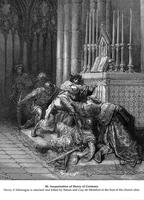
Assassination of Henry of Germany
Gustave Dore
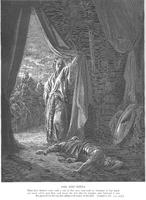
Jael Kills Sisera
Gustave Dore
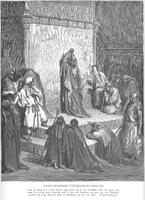
David Mourns the Death of Absalom
Gustave Dore
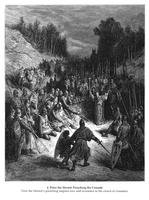
Peter the Hermit Preaching the Crusade
Gustave Dore
Satan in Council
Gustave Dore
Torture of Waldensians, Forcing Them to Hold a Red Hot Iron Bar, AD 1214
Jan Luyken
St. Peter And St. John Healing The Cripple
Albrecht Durer
Don Quixote
Gustave Dore
The Judgment of Solomon
Gustave Dore