
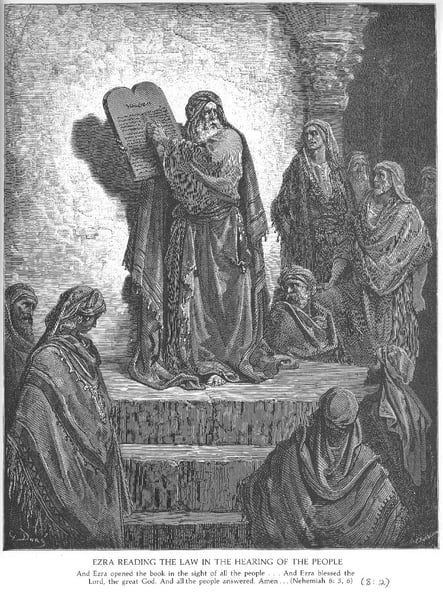
Gustave Dore sanatçısının Ezra Reads the Law to the People eseri hakkında uzman analizi
Tarz: Romanticism · Tür: religious painting
Expert Analysis of "Ezra Reads the Law to the People" by Gustave Doré
Gustave Doré’s Ezra Reads the Law to the People is a quintessential example of Romantic religious painting, where the artist harnesses the dramatic intensity and emotional power characteristic of the Romantic movement to breathe new life into a biblical narrative. The work’s significance lies in its fusion of monumental scale, theatrical composition, and profound spiritual gravitas—hallmarks of Romanticism that elevate the scene from mere illustration to a visceral, transcendent experience.
Stylistic Significance within Romanticism:
Romanticism valued intense emotion, awe-inspiring grandeur, and the sublime. Doré captures this by presenting Ezra as a solitary, almost prophetic figure elevated above a vast, shadowy crowd. The dramatic chiaroscuro—a hallmark of Romantic light-and-shadow play—creates a stark contrast between the illuminated scroll (the Law) and the dim, anonymous masses. This visual hierarchy not only emphasizes the sacred text but also mirrors the Romantic obsession with the individual’s struggle against overwhelming forces (here, the weight of divine law and communal sin). The crowd’s varied poses—some bowed, others reaching upward—convey a range of human responses, from despair to hope, aligning with Romanticism’s focus on subjective emotional experience.
Significance in Religious Painting:
Doré’s treatment of the subject moves beyond traditional iconography. Rather than a static teaching moment, he imbues the scene with a sense of crisis and renewal. Ezra’s raised hand and intense gaze suggest not just reading but a dramatic proclamation, as if the Law itself is being re-inscribed on the hearts of the people. This aligns with Romanticism’s reinterpretation of religious themes as deeply personal and morally urgent, rather than merely dogmatic. The architectural setting—perhaps a ruined temple or a vast hall—adds to the sense of historical gravitas, while the gathering of disparate figures (men, women, children) underscores the universal call to covenant.
Overall Significance:
In this work, Gustave Doré achieves what the best Romantic religious painting does: he makes an ancient story feel immediate, urgent, and emotionally overwhelming. The composition’s sweeping lines, the interplay of light and darkness, and the raw humanity of the crowd transform a biblical episode into a timeless meditation on authority, faith, and communal redemption. It stands as a testament to Romanticism’s ability to merge spectacular visual drama with profound spiritual reflection, affirming Doré’s reputation as a master of both illustration and high art.
Görsel olarak benzer
İlişkili kompozisyon ve renk paletine sahip 20 eser
David Mourns the Death of Absalom
Gustave Dore
The People Mourning over the Ruins of Jerusalem, Lamentations 1:1-2
Gustave Dore
St.Peter In The House Of Cornelius
Gustave Dore
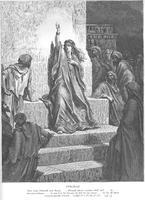
Deborah, engraved by Ettlin
Gustave Dore
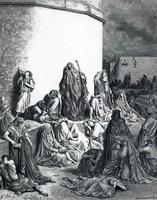
People Mourn over the Destruction of Jerusalem
Gustave Dore
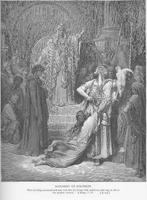
The Judgment of Solomon
Gustave Dore
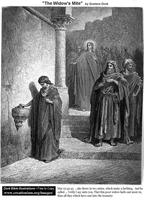
The Widow
Gustave Dore
The Plague of Jerusalem
Gustave Dore
The Courage of a Mother
Gustave Dore
Christ And The Tribute Money
Gustave Dore
Moorish dancers
Theodore Chasseriau
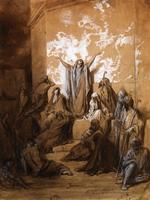
Jeremiah Preaching to His Followers
Gustave Dore
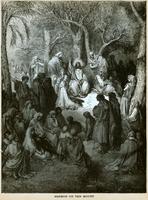
Sermon on the Mount
Gustave Dore
Don Quixote
Gustave Dore
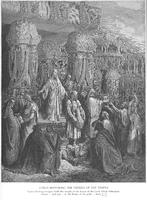
Cyrus Restoring the Vessels of the Temple
Gustave Dore
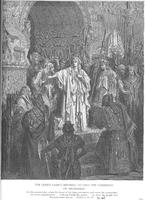
Queen Vashti Refuses to Obey Ahasuerus' Command
Gustave Dore
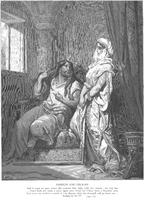
Samson and Delilah
Gustave Dore
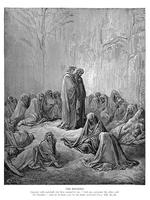
The Envious
Gustave Dore
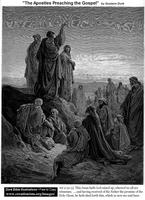
The Apostles Preaching The Gospel
Gustave Dore
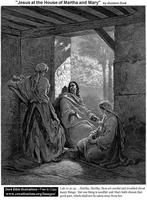
Jesus At The House Of Martha And Mary
Gustave Dore