
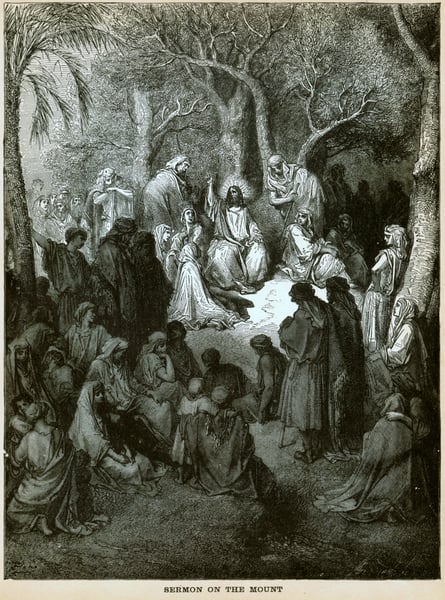
Expertenanalyse zu Gustave Dores Sermon on the Mount
Stil: Romanticism · Genre: religious painting
Expert Analysis: Sermon on the Mount by Gustave Doré
Gustave Doré’s Sermon on the Mount stands as a powerful exemplar of Romantic religious painting, where the artist’s signature dramatic intensity and meticulous detail elevate a familiar biblical narrative into an awe-inspiring, deeply emotional tableau. Created during a period when Doré was at the height of his fame as an illustrator and painter, this work underscores the Romantic fascination with the sublime, the vastness of nature, and the overwhelming scale of divine revelation.
Composition and Emotional Drama
Doré masterfully stages the scene to emphasize the spiritual authority of Christ and the human response to his teaching. Jesus is positioned on an elevated rocky outcrop, his figure silhouetted against a luminous sky—a classic Romantic device that frames the divine as a source of light and transcendence. Below him, a sprawling, multi-generational crowd stretches across the hillside, their poses and gestures ranging from reverent attention to prostrate awe. This composition creates a visual hierarchy: Christ above, the multitude below, and the natural world as both stage and participant in the sacred moment.
The artist’s characteristic use of chiaroscuro—deep shadows contrasting with bright, almost supernatural highlights—amplifies the emotional gravity. The faces in the crowd are rendered with Doré’s trademark precision, each individual expressing a unique blend of hope, wonder, and introspection. This humanization of the biblical scene aligns with Romanticism’s emphasis on individual emotional experience.
Significance within Romanticism
What makes Sermon on the Mount particularly significant is how it synthesizes Romanticism’s core preoccupations. First, the painting treats the natural landscape not merely as a backdrop but as an active force: the rugged, rocky terrain and the vast open sky evoke the sublime—a concept central to Romantic art that describes the overwhelming, even terrifying, beauty of nature that points toward the infinite. Second, Doré captures the moment of moral and spiritual teaching with a sense of universal human drama. The crowd is not a static assembly; it is a living organism of yearning and faith, reflecting the Romantic belief in the power of religion as a deeply felt, personal experience rather than mere doctrine.
Doré’s Legacy and Religious Vision
Doré was already celebrated for his monumental illustrated Bibles and literary works (such as Dante’s Divine Comedy and Milton’s Paradise Lost), and this painting demonstrates the same narrative ambition transferred to the canvas. His Sermon on the Mount stands out among 19th-century religious paintings for its democratic intimacy: it gives equal weight to the multitude of anonymous listeners as to Christ himself, suggesting that the message of the sermon is meant for every individual—a profoundly Romantic and humanist interpretation. The painting thus becomes a meditation on faith, community, and the transcendent power of words, rendered through Doré’s unique blend of theatricality and reverence. It remains a quintessential example of how Romanticism reshaped religious art, infusing it with emotional immediacy and a sense of the mystical grandeur of the natural world.
Visuell ähnlich
20 Werke mit ähnlicher Komposition und Farbpalette
Jesus Blessing the Children
Gustave Dore
The Gleaners
Gustave Dore
The People Mourning over the Ruins of Jerusalem, Lamentations 1:1-2
Gustave Dore
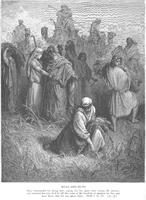
Ruth and Boaz
Gustave Dore
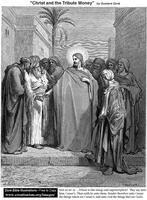
Christ And The Tribute Money
Gustave Dore
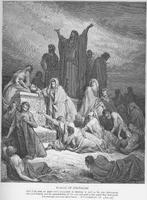
The Plague of Jerusalem
Gustave Dore
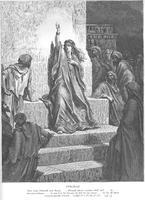
Deborah, engraved by Ettlin
Gustave Dore
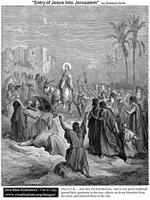
Entry Of Jesus Into Jerusalem
Gustave Dore
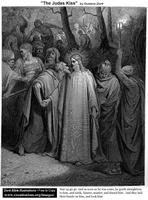
The Judas Kiss
Gustave Dore
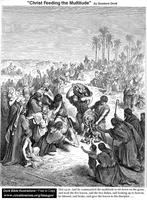
Christ Feeding The Multitude
Gustave Dore
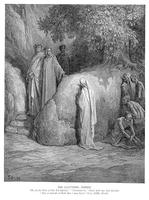
The Gluttons--Forese
Gustave Dore
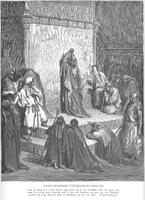
David Mourns the Death of Absalom
Gustave Dore
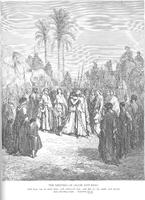
Jacob and Esau Meet
Gustave Dore
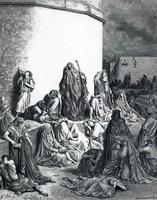
People Mourn over the Destruction of Jerusalem
Gustave Dore
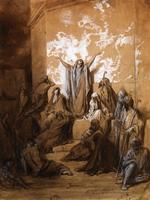
Jeremiah Preaching to His Followers
Gustave Dore
Raising of Jairus Daughter
Ilya Repin
The Judgment of Solomon
Gustave Dore
The tribute money
Rembrandt
St.Peter In The House Of Cornelius
Gustave Dore
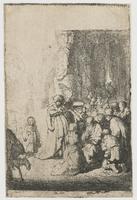
Simeon`s hymn of praise
Rembrandt