
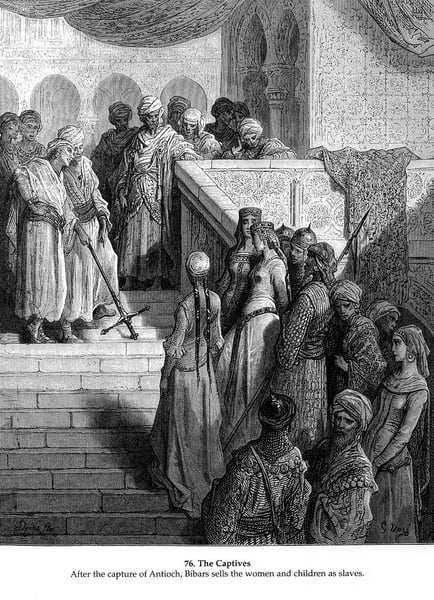
Expertenanalyse zu Gustave Dores The Captives
Stil: Romanticism · Genre: illustration
Artwork: The Captives by Gustave Doré
Style: Romanticism
Genre: Illustration
Analysis: Significance Within Romanticism and Illustration
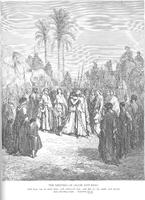
Gustave Doré’s The Captives exemplifies the core tenets of Romanticism—intense emotion, dramatic contrast, and a focus on human suffering—while elevating the humble genre of illustration to a vehicle for profound narrative power. As an illustration, the work was likely created to accompany a literary text (Doré famously illustrated Dante’s Inferno, Milton’s Paradise Lost, and the Bible), but it transcends mere decoration. Instead, it functions as a standalone visual poem.
Emotional & Psychological Depth
Romanticism prizes the sublime—the overwhelming experience of terror and awe. In The Captives, Doré captures the despair of imprisoned figures through their slumped postures, shadowed faces, and the palpable weight of confinement. The composition likely uses steep diagonals and towering architectural elements (chains, dungeon walls) to emphasize helplessness, making the viewer feel the captives’ emotional captivity as much as their physical one.
Mastery of Light and Shadow
Doré’s signature use of chiaroscuro—extreme contrasts between light and dark—creates a theatrical, almost supernatural atmosphere. The light source (perhaps a narrow window or torch) casts long, eerie shadows, isolating the figures and heightening their isolation. This technique visualizes the Romantic obsession with the struggle between hope and despair, freedom and oppression.
Blurring Boundaries Between Fine Art and Illustration
In the 19th century, illustration was often dismissed as “low” art. Doré challenged that hierarchy by infusing his wood engravings with the compositional ambition and emotional urgency of history painting. The Captives is significant because it demonstrates that illustration can carry the same weight as oil on canvas—rich in psychological nuance, allegorical resonance, and technical brilliance.
Narrative Implication
Though we lack the specific literary source, the title The Captives evokes universal themes of injustice, entrapment, and resilience. Doré’s Romantic lens turns anonymous prisoners into archetypes of human suffering—a reflection of the era’s fascination with the individual’s struggle against larger forces (nature, society, fate).
Legacy
Doré’s illustrations, including The Captives, influenced later filmmakers (e.g., horror and fantasy cinema) and graphic novelists (e.g., the detailed, shadowy worlds of Winsor McCay or Mike Mignola). The work remains a benchmark for how darkness, composition, and emotion can make even a printed page a portal to the sublime.
Visuell ähnlich
20 Werke mit ähnlicher Komposition und Farbpalette
Arrival at Cairo of Prisoners of Minich
Gustave Dore
Astonishment of the Crusaders at the Wealth of the East
Gustave Dore
A Friendly Tournament
Gustave Dore
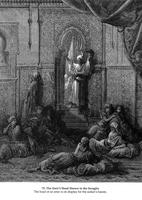
The Emir's Head Shown in the Seraglio
Gustave Dore
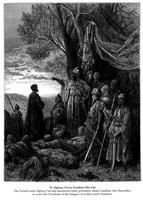
Ilghazy Gives Gauthier His Life
Gustave Dore
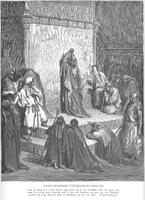
David Mourns the Death of Absalom
Gustave Dore
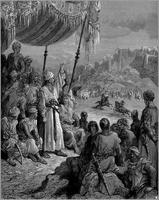
A Friendly Tournament during the Third Crusade in 1189
Gustave Dore
St. Francis of Assisi
Gustave Dore
Solomon Receives the Queen of Sheba
Gustave Dore
Don Quixote
Gustave Dore
The Judgment of Solomon
Gustave Dore
The Martyrdom of Eleazar the Scribe
Gustave Dore
Queen Vashti Refuses to Obey Ahasuerus' Command
Gustave Dore
Abraham Dismissing Hagar
Rembrandt
Turkmens representing war trophies to Khiva khan
Vasily Vereshchagin
Eulalia Suffocated and Burned, Villa Nova, Portugal, AD 302
Jan Luyken
Peter and John healing the cripple at the gate of the Temple
Rembrandt
French Ambassador le Vicomte De Andrezel received by Sultan Ahmed III on October 10, 1724, audience with the Sultan
Jean Baptiste Vanmour
Death of Baldwin I the Latin King of Jerusalem
Gustave Dore
Jacob and Esau Meet
Gustave Dore