
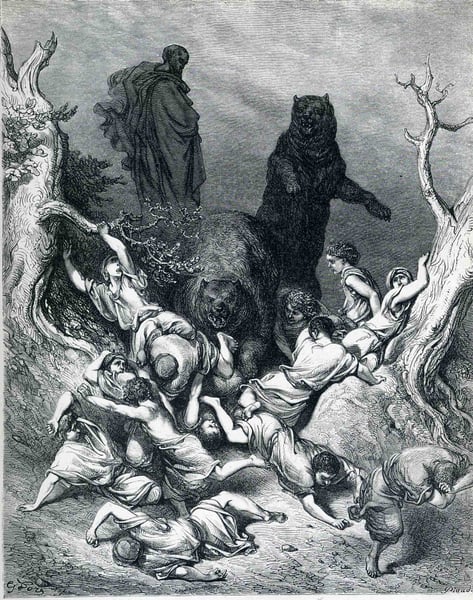
Expert analysis of Gustave Dore’s The Children Destroyed by Bears
Style: Romanticism · Genre: religious painting
Expert Analysis: "The Children Destroyed by Bears" by Gustave Doré
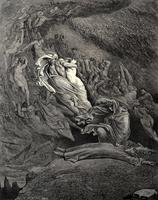
As a Romantic religious painting, Gustave Doré’s “The Children Destroyed by Bears” derives its significance from the way it harnesses the core Romantic preoccupations—intense emotion, sublime terror, and the overwhelming power of nature—to dramatize a biblical narrative of divine judgment. The work transforms a specific Old Testament episode (2 Kings 2:23–24, in which the prophet Elisha curses youths who mock him, leading to their destruction by bears) into a visceral meditation on moral consequence and the awe-inspiring, often fearsome, presence of the sacred.
Within the context of Romanticism, the painting stands out for its dramatic chiaroscuro and dynamic composition. Doré likely thrusts the viewer into the chaotic, violent moment, using sharp contrasts of light and shadow to isolate the figures against a dark, threatening landscape. The bears themselves are not mere animals but agents of an inscrutable divine will—rendered with muscular, almost supernatural force, embodying the Romantic fascination with untamed nature as both beautiful and terrifying. The children’s poses, caught mid-flight or already struck down, convey a raw, almost operatic pathos that invites the spectator to feel the horror and moral gravity of the scene rather than simply observe it.
As a religious painting, its significance lies in its refusal to sanitize the biblical account. Instead of presenting a calm, doctrinal message, Doré emphasizes the uncomfortable, overwhelming power of God’s justice—a theme that resonated with Romantic-era audiences drawn to the sublime and the sublime’s capacity to humble human reason. The painting thus functions as a religious allegory for the limits of human defiance, but it also elevates the biblical story into a universal statement on the terror of consequences, making it a landmark of Romantic religious art. Its lasting impact is in how it merges the sacred with the visceral, reminding viewers that faith can be both terrifying and magnificent—a hallmark of the Romantic spirit.
Visually similar
20 works with related composition and palette
The Greeks Leave after Fire of Troy
Theodoor van Thulden
The Inferno, Canto 13
Gustave Dore
Apollo and the Nine Muses Surrounded by Poets on Mount Parnassus
Karel Škréta
Thais
Gustave Dore
The Martyrdom of Saint Peter
Titian
a Gathering of Students, Amon
Salvator Rosa
The Inferno, Canto 12
Gustave Dore
Geri Del Bello
Gustave Dore
The Minataur
Gustave Dore
Death Of Ananias
Gustave Dore
The Inferno, Canto 7
Gustave Dore
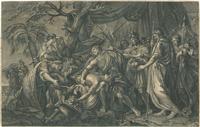
Achilles Laments the Death of Patroclus 1764
Domenico Cunego
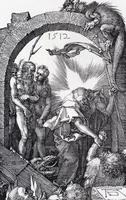
Harrowing Of Hell
Albrecht Durer
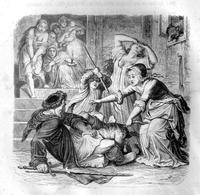
Reineke Fuchs1
Wilhelm von Kaulbach
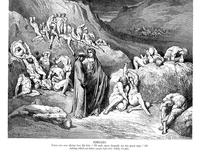
Forgers II
Gustave Dore
The Sibyls in the Church of St. Our Lady of Peace
Giovanni Battista Piranesi
The Inferno, Canto 28
Gustave Dore
Reineke Fuchs1
Wilhelm von Kaulbach
The Stoning of Stephen
Gustave Dore
The Inferno, Canto 5
Gustave Dore