
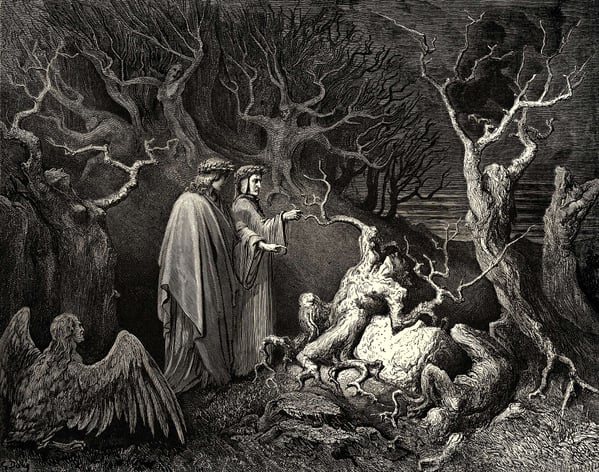
Analisi esperta di The Inferno, Canto 13 di Gustave Dore
Stile: Romanticism · Genere: illustration
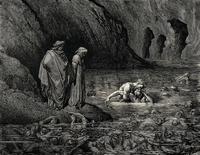
Expert Analysis of "The Inferno, Canto 13" by Gustave Doré
Within the context of Romanticism and the genre of illustration, Gustave Doré’s "The Inferno, Canto 13" stands as a masterful synthesis of literary interpretation and visual drama. The work is significant for several reasons:
First, it exemplifies the Romantic obsession with the sublime and the terrifying. Doré renders Dante’s Wood of the Suicides with a dense, gnarled forest that seems to writhe with anguish—the twisted trees are not merely allegorical but become active, tortured presences. The deep chiaroscuro (extreme contrasts of light and shadow) heightens the emotional intensity, pulling the viewer into a realm of palpable despair. This aligns perfectly with Romanticism’s emphasis on powerful, often dark emotions and the awe-inspiring, uncontrollable forces of nature and the supernatural.
Second, as an illustration, Doré transcends mere accompaniment to Dante’s text. He does not simply depict the scene; he adds a layer of interpretive vision that has since become the definitive visual companion for many readers. Through meticulous engraving, he captures the specific moment when the harpies tear at the trees and the bleeding, speaking branches lament their fate. The composition forces the eye through the tangled undergrowth, mirroring the confusion and horror of Dante the pilgrim. This symbiotic relationship between word and image was a hallmark of 19th-century book illustration, and Doré’s work here set a new standard for how epic poetry could be visualized.
Finally, the work’s significance lies in its technical and atmospheric mastery. Doré’s ability to suggest infinite depth and texture through line work alone—without color—creates a haunting, dreamlike quality. The Romantic fascination with the grotesque and the psychologically tormented is fully realized: the suicide victims are neither noble nor heroic, but pitifully human, their punishment fused with the very landscape. This merging of internal torment with external environment is a quintessentially Romantic device, making "Canto 13" not just an illustration, but a standalone vision of damnation that continues to shape our cultural imagination of Dante’s Hell.
Visivamente simili
20 opere con composizione e palette affini
The Suicides
Gustave Dore
The Hapies' Wood
Gustave Dore
The Inferno, Canto 6
Gustave Dore
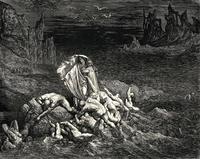
The Inferno, Canto 7
Gustave Dore
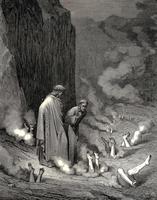
The Inferno, Canto 19
Gustave Dore
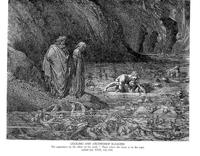
Ugolino and Archbishop Ruggieri
Gustave Dore
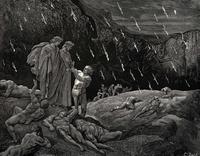
The Inferno, Canto 15
Gustave Dore
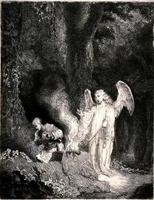
Gideon and the Angel
Ferdinand Bol
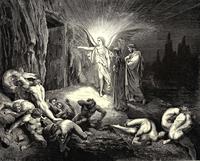
The Inferno, Canto 9
Gustave Dore
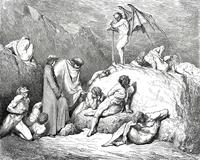
The Inferno, Canto 28
Gustave Dore
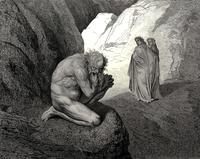
The Inferno, Canto 7
Gustave Dore
The Punishment of the Simonists
Gustave Dore
Geri Del Bello
Gustave Dore
The Angel
Gustave Dore
Inferno Canto 4
Gustave Dore
Forgers II
Gustave Dore
Sower of Discord
Gustave Dore
Dante and Vergil Meet the Wild Animals in the Forest
Joseph Anton Koch
The Gluttons
Gustave Dore
The Inferno, Canto 32
Gustave Dore