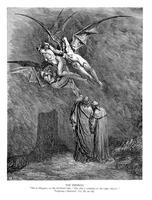
Expert Art Historical Analysis: The Minataur by Gustave Doré
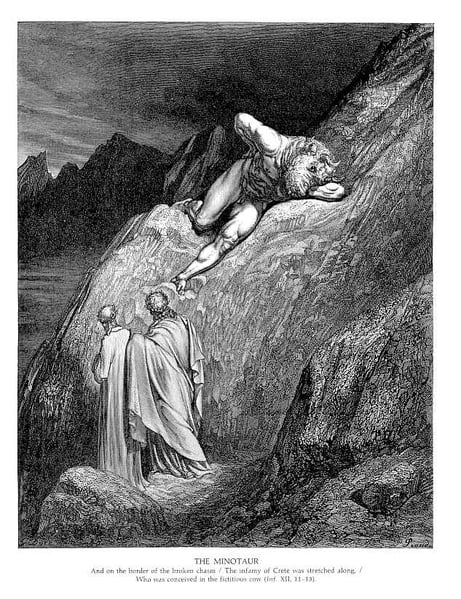
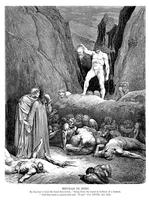
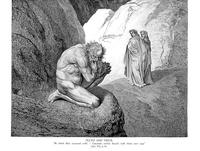
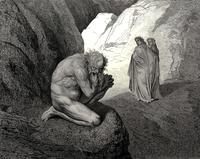
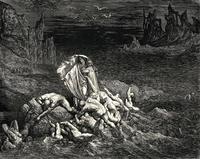
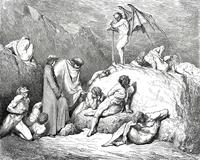
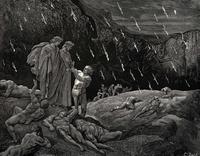
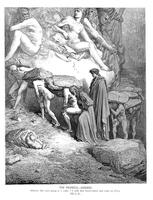
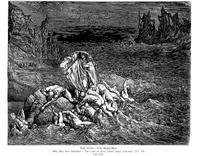
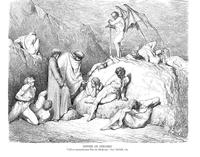
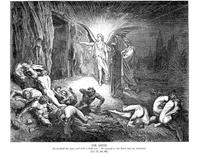
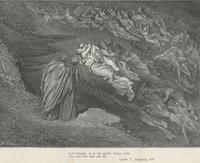
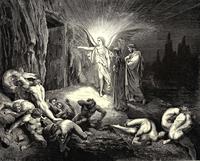
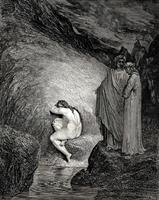
Gustave Doré’s The Minataur (note the archaic spelling) exemplifies the Romantic fascination with the sublime, the monstrous, and the emotional intensity of mythological subjects. Executed in Doré’s signature illustrative style, the work transcends mere book decoration to become a standalone meditation on fear and darkness.
Significance within Romanticism and Illustration:
As a Romantic illustration, Doré’s The Minataur harnesses the movement’s core tenets—dramatic chiaroscuro, raw emotional power, and a preoccupation with the grotesque and supernatural. The minotaur, half-man, half-bull, embodies the Romantic obsession with untamed nature and the irrational. Doré’s densely hatched lines and stark contrasts heighten the creature’s menace, while the labyrinthine setting evokes the psychological maze of human dread.
Doré’s work in this genre was revolutionary: he elevated illustration from a secondary craft to an art form capable of conveying profound narrative and emotional weight. The Minataur is a prime example of how Romantic illustration could merge literary antiquity with visceral, modern psychology, influencing generations of artists in print and fine art. Its significance lies in Doré’s ability to make myth feel immediate, terrifying, and achingly human—hallmarks of the Romantic spirit.