
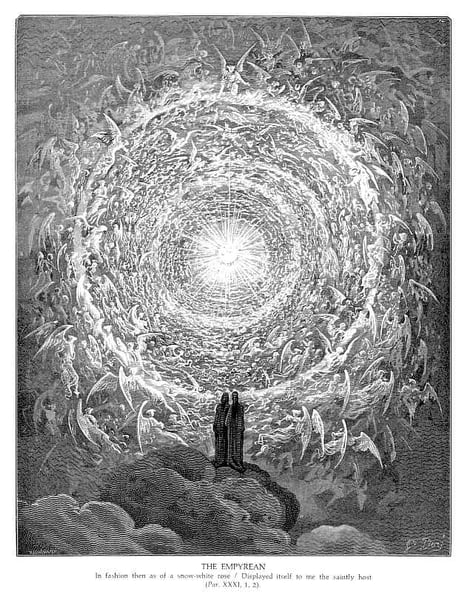
Analisi esperta di The Empyrean di Gustave Dore
Stile: Romanticism · Genere: illustration
Expert Analysis of "The Empyrean" by Gustave Doré
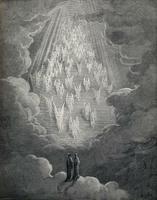
Gustave Doré’s The Empyrean stands as a masterful example of Romantic illustration, a genre in which the artist redefined visual storytelling through dramatic intensity and sublime grandeur. As a work aligned with Romanticism, it channels the movement’s core preoccupations: the awe of the infinite, the spiritual sublime, and the emotional power of light and darkness.
Significance within Romanticism
Doré’s illustration transforms a celestial subject—the Empyrean, the highest heaven of Dante’s Paradiso—into a visceral experience of transcendence. The composition likely employs a soaring vertical perspective, with layers of radiant light piercing through deep shadow, a hallmark of Romantic chiaroscuro. This use of extreme contrasts between blinding luminosity and profound obscurity evokes the Romantic fascination with the ineffable and the overwhelming power of the divine. The viewer is positioned as a humble mortal confronting an eternal, almost terrifying beauty, a direct expression of the sublime—a key Romantic concept.
Genre and Innovation
Within the genre of illustration, Doré elevated commercial book art to high dramatic art. His work for the Divine Comedy (1861) set a new standard for illustrated literature, combining precise draftsmanship with a visionary, almost cinematic sense of scale. The Empyrean exemplifies this: it is not merely a decorative accompaniment to text but an independent visual poem that amplifies the written word. Doré’s ability to render the immaterial—light, heaven, divine presence—with such palpable weight and texture was revolutionary, making the invisible feel physically and emotionally present.
Conclusion
The Empyrean is significant because it encapsulates Romanticism’s quest to depict the infinite through the finite medium of illustration. Doré’s genius lies in his synthesis of technical skill and visionary imagination, creating an image that resonates with the era’s longing for spiritual truth and emotional intensity. It remains a benchmark for how illustration can achieve the highest artistic and philosophical aspirations of its time.
Visivamente simili
20 opere con composizione e palette affini
Crystalline Heaven
Gustave Dore
Coronation of the Virgin
Domingos Sequeira
Paradise
Tintoretto
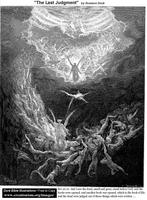
The Last Judgment
Gustave Dore
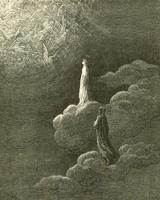
Paradiso Canto 14
Gustave Dore
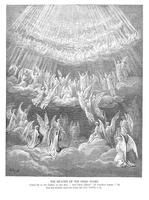
The Heaven of the Fixed Stars II
Gustave Dore
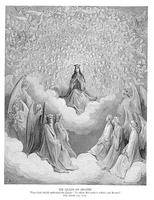
The Queen of Heaven
Gustave Dore
The Cross
Gustave Dore
The Sun--Glorifies Souls
Gustave Dore
The God Man
Jean Delville
Saturn
Gustave Dore
Sketch for Paradise (to decorate the room of the Grand Council of the ducal palace of Venice)
Paolo Veronese
St. Agnes is Received into Heaven
Giovanni Battista Gaulli
Behold the Celestial Bridegroom Cometh
Nikolaos Gyzis
Last Judgement
William Blake
Inferno
Sarunas Sauka
Doomsday
Albrecht Durer
The Eagle II
Gustave Dore
The Assumption of the Virgin (detail)
Correggio
Paradiso Canto 1
Gustave Dore