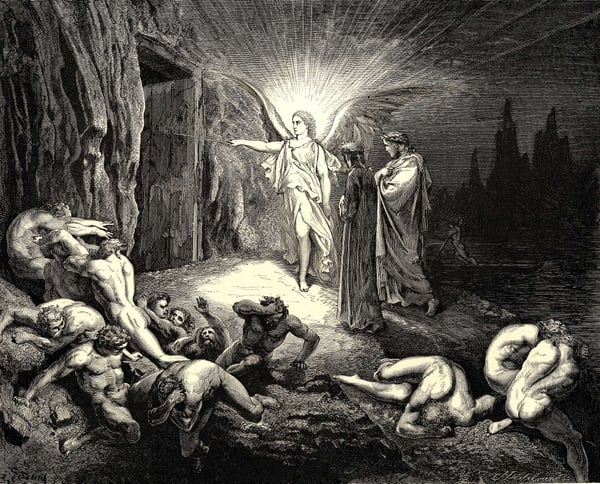
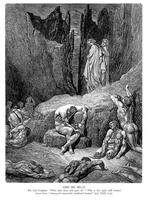
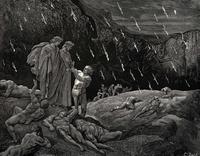
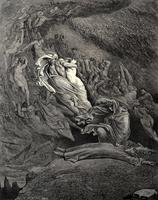
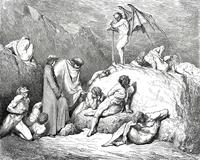
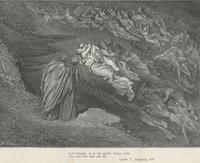
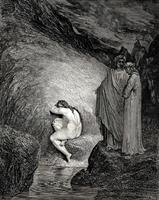
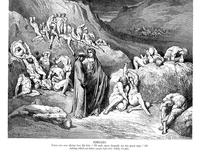
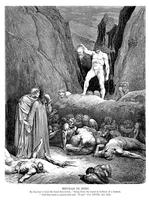
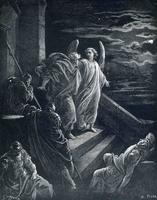
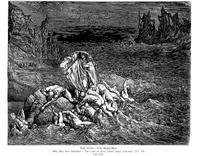
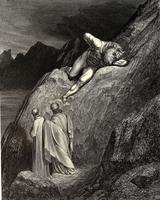
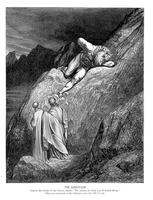
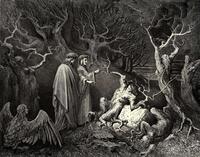
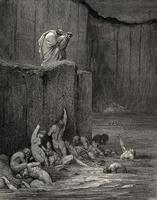
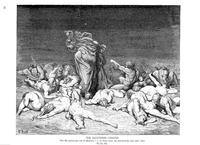
Gustave Doré’s The Inferno, Canto 9 is a masterful example of Romantic illustration, a genre in which the artist’s visual imagination elevates narrative to emotional and spiritual heights. As a product of Romanticism, the work prioritizes intense feeling, the sublime, and the supernatural—qualities that Doré channels through his signature chiaroscuro and dynamic composition.
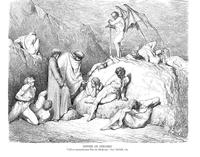
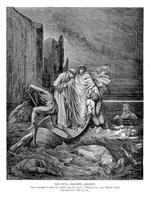
The significance of this print lies in its ability to translate Dante’s allegorical text into a visceral, almost cinematic experience. In Canto 9, the poet and Virgil stand before the gates of Dis, threatened by the Furies and the monstrous Medusa. Doré captures the moment with dramatic light bursting through a cavernous, hellish landscape, emphasizing the terror of the unknown as the angels descend to intervene. The etching’s deep shadows and sharp contrasts evoke the Romantic fascination with the dark and the ineffable, while the tiny, fragile figures of Dante and Virgil underscore humanity’s insignificance before cosmic forces.
As an illustration, Doré’s work is groundbreaking: it not only accompanies but amplifies the literary text, making the abstract terrors of the Divine Comedy tangible. His theatrical staging and precise draftsmanship set a new standard for book illustration in the 19th century, blending Romantic pathos with a meticulous, almost architectural sense of space. This piece, in particular, exemplifies how Doré transformed a medieval vision into a Romantic nightmare, forever shaping the visual legacy of Dante’s Inferno.