
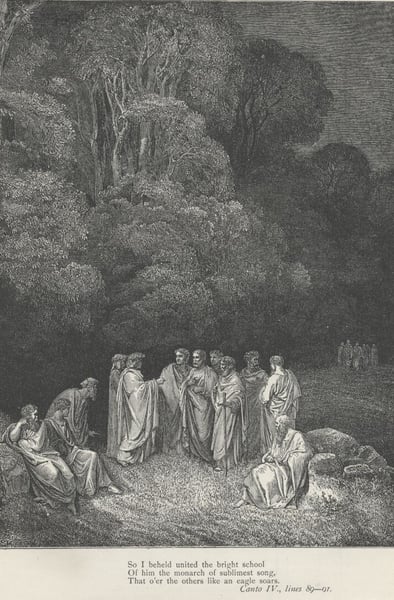
Gustave Dore sanatçısının Inferno Canto 4 eseri hakkında uzman analizi
Tarz: Romanticism · Tür: illustration
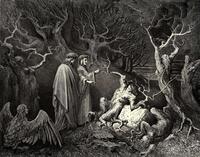
As an expert in art history, I will analyze Gustave Doré’s Inferno Canto 4 exclusively through the provided facts: its style (Romanticism) and genre (illustration). The artwork’s significance lies in how it embodies the core Romantic preoccupation with the sublime, the emotional, and the fantastical, while simultaneously elevating the status of illustration from a secondary craft to a powerful, independent visual narrative.
Significance within Romanticism
Doré’s Inferno Canto 4 is a quintessential Romantic work because it prioritizes emotional intensity and the representation of the ineffable over strict classical order. The Romantic movement sought to evoke awe, terror, and wonder—often through depictions of vast, overwhelming landscapes or supernatural realms. In this illustration for Dante’s Divine Comedy, Doré masterfully creates a sense of monumental scale and atmospheric depth. The viewer is confronted with a liminal, shadowy space (the Limbo of Canto 4) that feels both ancient and infinite. The dramatic chiaroscuro—extreme contrasts of light and dark—is typical of Romanticism, used here to suggest the moral and spiritual weight of the scene. The small scale of the human figures (Dante and Virgil) relative to the immense architectural and natural surroundings reinforces the Romantic theme of humanity dwarfed by sublime, cosmic forces.
Significance within the Illustration Genre
This work is a landmark in the history of illustration because it demonstrates that an illustration can function as a self-sufficient work of high art, not merely a textual supplement. Doré’s technique—meticulous engraving that captures both fine detail and sweeping drama—allowed him to create images that vividly interpret and expand upon the literary source. For Inferno Canto 4, he translates Dante’s poetic description of the virtuous pagans in Limbo into a visually haunting tableau: a dark, cavernous realm populated by noble, sorrowful figures. The composition guides the eye through a narrative of descent and reflection, making the viewer feel as though they are entering the text. By investing illustration with the full emotional and technical weight of Romantic painting, Doré helped legitimize the genre as a medium capable of profound artistic expression, influencing countless subsequent book illustrators and visual storytellers.
Overall Significance
The artwork’s true significance is its synthesis of Romantic ideals with the illustrative mission. Doré does not simply depict a scene from Dante; he transforms it into an immersive, emotionally charged experience that stands alone. Inferno Canto 4 remains a powerful example of how Romanticism’s love for the dramatic, the mysterious, and the sublime could be channeled through the accessible yet artistically rigorous medium of illustration. It is a work that bridges literature and visual art, exemplifying the Romantic belief in the power of the imagination to reveal hidden, profound truths.
Görsel olarak benzer
İlişkili kompozisyon ve renk paletine sahip 20 eser
Purgatorio
Gustave Dore
Apocalyptic Procession
Gustave Dore
The Eunoe
Gustave Dore
Beatrice & Virgil
Gustave Dore
Purgatorio Canto 33
Gustave Dore
The She-Wolf
Gustave Dore
The Gluttons--Forese
Gustave Dore
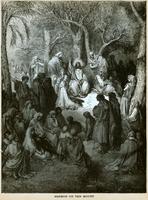
Sermon on the Mount
Gustave Dore
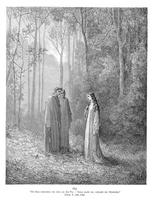
Pia
Gustave Dore
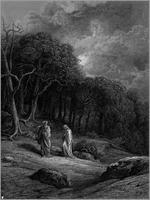
Idylls of the King
Gustave Dore
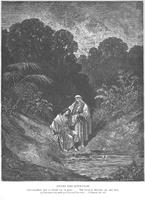
David and Jonathan
Gustave Dore
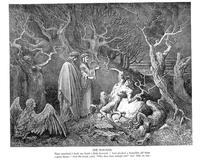
The Suicides
Gustave Dore
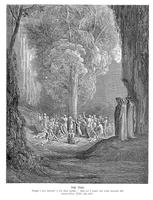
The Tree
Gustave Dore
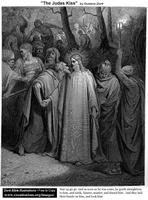
The Judas Kiss
Gustave Dore
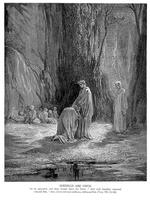
Sordello and Virgil
Gustave Dore
The Plague of Jerusalem
Gustave Dore
Death Of Ananias
Gustave Dore
The Seventh Circle II
Gustave Dore
Terrestrial Paradise
Gustave Dore
The Inferno, Canto 13
Gustave Dore