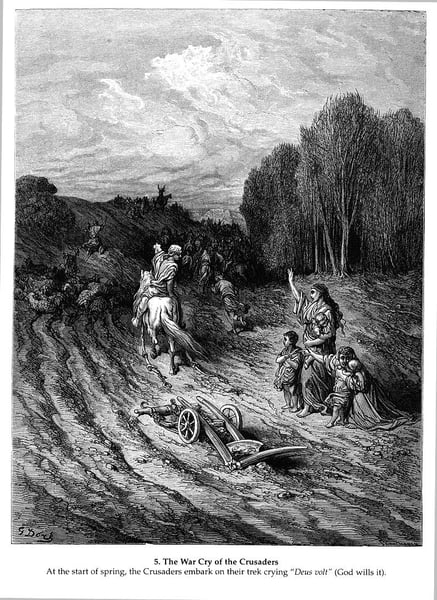
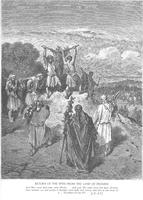
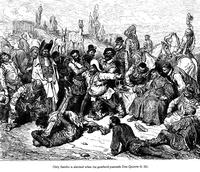
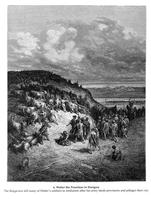
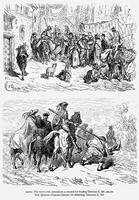
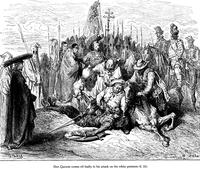
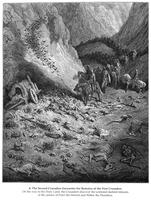
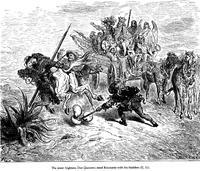
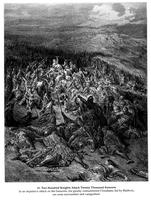
Gustave Doré’s The War Cry of the Crusaders exemplifies the Romantic preoccupation with dramatic emotion, historical grandeur, and the sublime. As an illustration, it transcends mere narrative accompaniment, standing as a powerful visual statement in its own right. The composition’s significance lies in its masterful use of chiaroscuro and dynamic movement—a hallmark of Romanticism—to convey the fervor and chaos of a crusader charge. Doré employs a low horizon and towering figures to amplify the sense of heroic scale, while the turbulent sky and gestural forms evoke both spiritual zeal and mortal struggle. This work is notable for how it synthesizes Romanticism’s fascination with medieval history with the illustrative genre’s demand for clarity, resulting in an image that is simultaneously epic and intimately evocative. The raw, almost theatrical energy of the war cry becomes a symbol of Romantic passion, making the piece a quintessential example of Doré’s ability to translate literary and historical themes into indelible visual moments.