
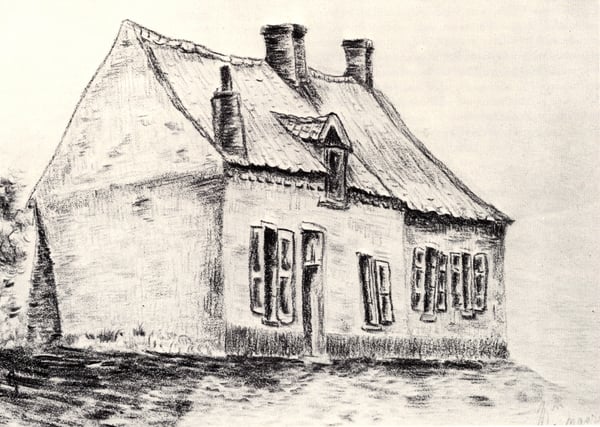
A house Magros
Dettagli
Analisi esperta di A house Magros di Vincent van Gogh
Stile: Realism · Genere: cityscape
Expert Analysis of "A house Magros" by Vincent van Gogh
Style: Realism | Genre: Cityscape
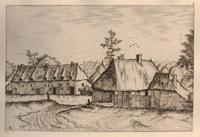
Within the canon of Vincent van Gogh’s oeuvre, "A house Magros" stands as a compelling testament to his early engagement with Realism—a phase often overshadowed by his later Post-Impressionist innovations. Executed as a cityscape, the work exemplifies the artist’s disciplined observation of mundane urban life, a hallmark of the Realist movement that sought to depict everyday subjects with unidealized clarity.
Composition and Treatment:
The painting captures a modest house—likely the “Magros” residence, possibly a reference to a specific location in the Netherlands or Belgium—embedded within a street scene. Van Gogh employs a restrained palette of earthy browns, muted grays, and deep greens, avoiding the vibrant chromatic experimentation of his later years. The brushwork is tight and deliberate, with careful attention to architectural detailing: the roofline, window frames, and texture of the façade. This precision reflects the Realist commitment to verisimilitude, allowing the viewer to sense the actual weight and weather-worn character of the structure.
Thematic Significance:
As a cityscape, "A house Magros" does not romanticize its subject. Instead, it presents the house as a stable, unremarkable element of the urban fabric—a dwelling that exists without narrative embellishment. This focus on the prosaic was revolutionary for the time, aligning van Gogh with Realist contemporaries who championed the dignity of ordinary environments and working-class life. The painting’s significance lies in its refusal to elevate the scene through drama or sentiment; it is a direct record of a place, seen with honesty.
Position in van Gogh’s Career:
While van Gogh is universally celebrated for his expressive Post-Impressionist works, "A house Magros" reveals the foundational skills he developed under Realist influences. It demonstrates his ability to render space, light, and architectural form with academic rigor—techniques he would later deconstruct into his iconic broken brushstrokes and emotional color. For scholars, this piece is a crucial prelude, showing the artist mastering a tradition before daring to overturn it.
Conclusion:
In the context of Realist cityscape painting, "A house Magros" is significant for its austere dedication to fact. It captures a moment in van Gogh’s artistic evolution when his eye was sharpening on the world as it is, not as it feels. This work affirms that even in his earliest, most grounded period, van Gogh possessed the rare ability to transform a simple house into a quiet yet indelible portrait of place.
Museum / Gallery
Visivamente simili
20 opere con composizione e palette affini
A Zandmennik house
Vincent van Gogh
Water mill
Jean-Francois Millet
Houses in Ouessant
Maurice Utrillo
House birthplace Millet
Jean-Francois Millet
Fromelles
Adolf Hitler
H4440 L246251427
Conrad Theys
Route traversant village
Theophile Steinlen
Cottages in Saintes-Maries
Vincent van Gogh
Route Traversant Un Village
Theophile Steinlen
Farm on L'Ile d'Ouessant (Finistere)
Maurice Utrillo
“Au Charbonnage” Café
Vincent van Gogh
La maison blanche
Marie Duhem
Vicarage at Nuenen
Vincent van Gogh
Bourg Breton Plestin
Theophile Steinlen
Breton Ruins
Grace Albee
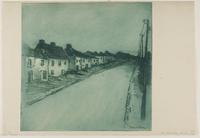
Route Traversant Un Village
Theophile Steinlen
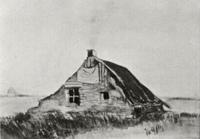
Farmhouse
Vincent van Gogh
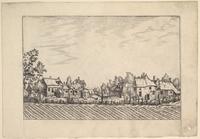
Farms, Ploughed Field in the Foreground from Praediorum Villarum Et Rusticarum Casularum Icones Elenoantissimae Ad Vivum in Apre Deformatae
Master of the Small Landscapes
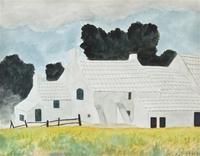
De Witte Hoeve
Leon Spilliaert
Large Sheds, plate 21 from Regiunculae et Villae Aliquot Ducatus Brabantiae
Master of the Small Landscapes