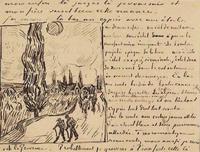
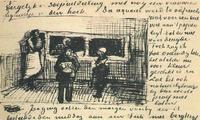
Expert Analysis: "A Lane of Cypresses with a Couple Walking" by Vincent van Gogh
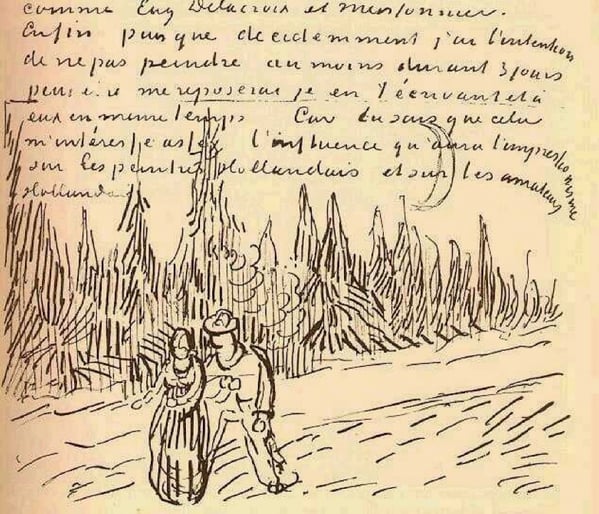
As a sketch and study within the Post-Impressionist style, this work holds significance for what it reveals about Van Gogh’s creative process and his relentless pursuit of emotional expression through line and form.
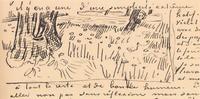
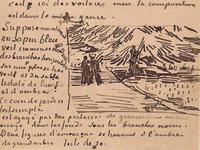
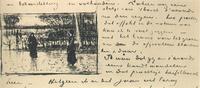
Post-Impressionism, as a movement, moved beyond the naturalism of Impressionism to emphasize the artist’s subjective experience. Here, Van Gogh’s preparatory drawing of cypresses—a motif he famously explored in later paintings such as The Starry Night and Road with Cypress and Star—demonstrates his characteristic energy. The sweeping, rhythmic strokes of the lane and the towering cypresses are not merely descriptive; they convey a sense of movement and inner turmoil. The addition of a couple walking introduces a human scale, grounding the scene in quiet intimacy against the dramatic, spiraling trees.
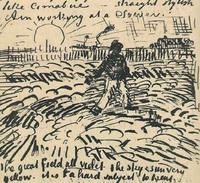
As a study, this piece offers a rare glimpse into Van Gogh’s experimental draftsmanship, where he refined the exaggerated, undulating lines that became his signature. It exemplifies how he used sketches to capture the essence of a subject—transforming a simple lane into a vibrating, emotive landscape. This work is thus significant as a document of his artistic evolution, revealing the foundation upon which his most iconic Post-Impressionist masterpieces were built.