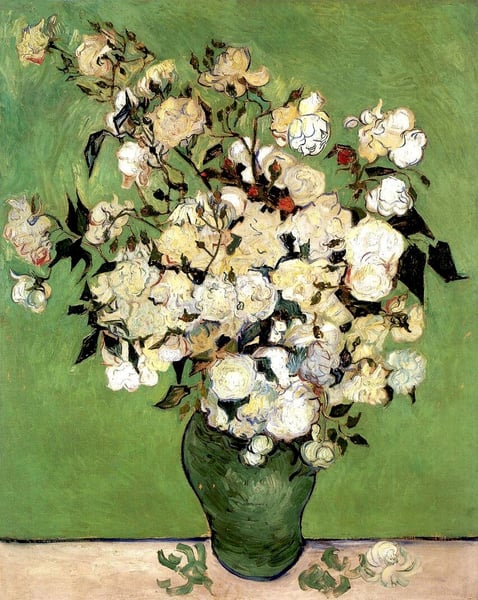
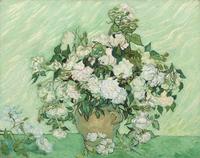
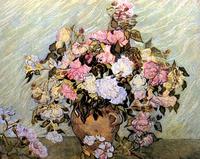
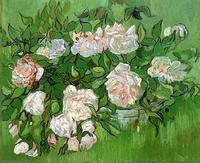
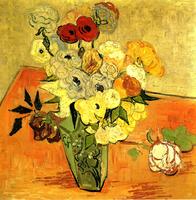
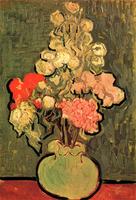
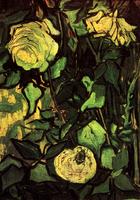
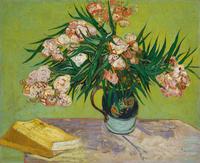
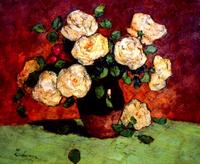
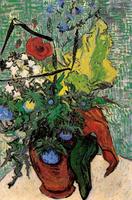
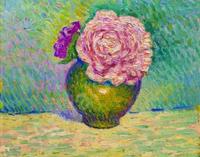
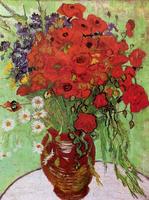
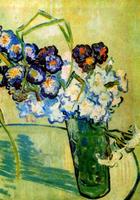
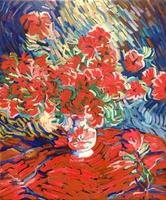
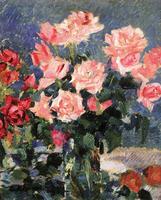
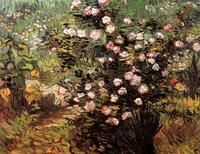
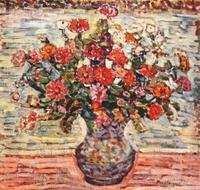
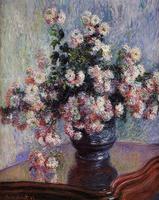
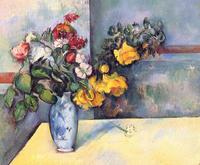
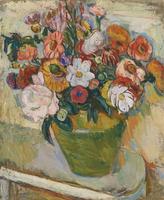
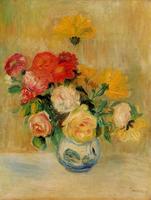
"A Vase of Roses" by Vincent van Gogh exemplifies the emotional intensity and innovative technique that define Post-Impressionism. As a flower painting, it transcends traditional still life by transforming a simple subject into a vibrant study of color, texture, and psychological resonance. Van Gogh’s signature thick, swirling brushstrokes (impasto) give the roses a sculptural, almost kinetic energy, while his bold, often complementary color contrasts—such as deep greens against vivid pinks or reds—heighten the sense of life and vitality. The work is significant for its departure from naturalistic representation: the flowers are not merely decorative but serve as a vehicle for van Gogh’s subjective experience, expressing both the beauty and the fleeting, fragile nature of existence. Painted during a period of personal turmoil, the roses also reflect van Gogh’s search for solace in nature, making this piece a poignant example of how Post-Impressionism used everyday motifs to explore deeper emotional and symbolic meaning.