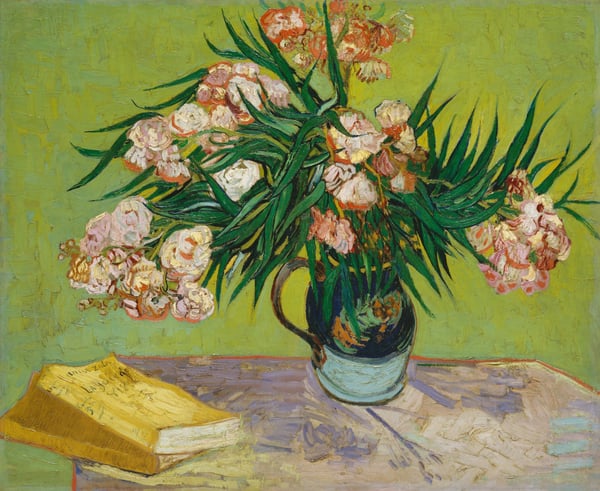
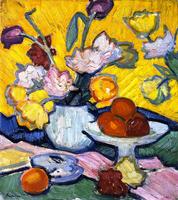
In "Oleanders and Books," Vincent van Gogh transforms a traditional still life into a profound meditation on the tension between vitality and intellect, characteristic of his Post-Impressionist approach. The work’s significance lies in its vivid, almost symbolic use of color and texture: the fiery pink and green oleanders—beautiful yet poisonous—are juxtaposed against the somber, structured presence of books, suggesting a dialogue between nature’s raw energy and human culture’s ordered knowledge. Van Gogh’s signature thick, swirling brushstrokes imbue the canvas with a palpable sense of movement and emotion, elevating a simple genre scene into an expression of his inner turmoil and search for meaning. This piece exemplifies how Post-Impressionism moved beyond objective representation to convey subjective experience, with the oleanders’ fleeting bloom and the books’ permanence creating a poignant contrast that defines van Gogh’s unique vision.