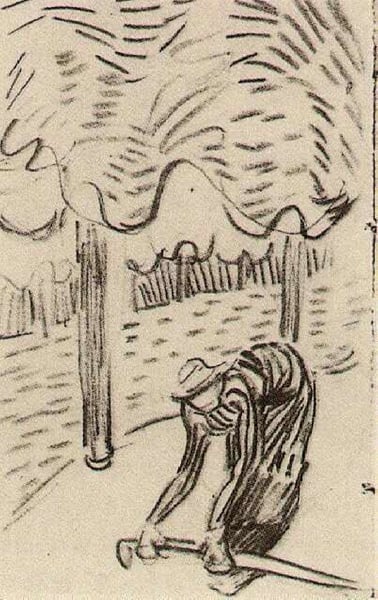
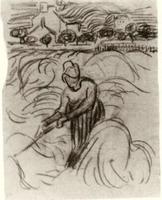
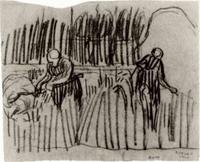
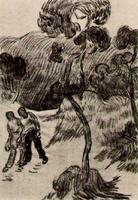
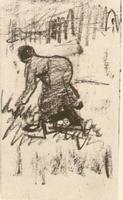
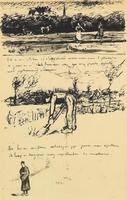
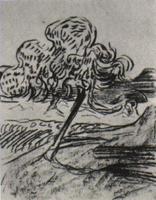
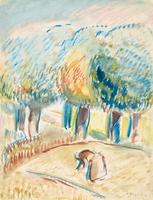
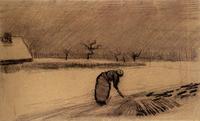
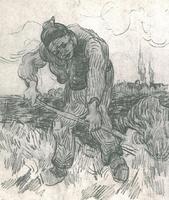
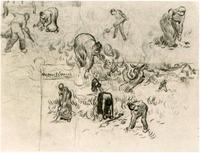
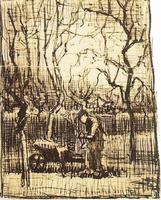
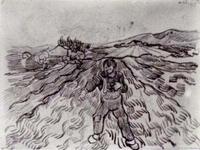
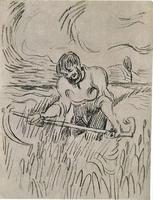
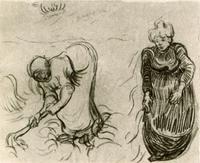
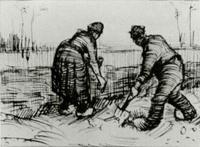
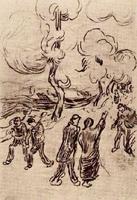
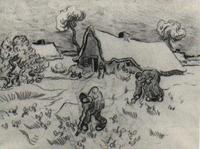
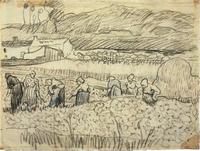
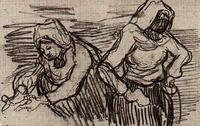
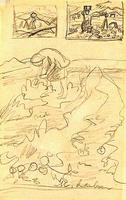
"A Woman Picking Up a Stick in Front of Trees" is a significant work within Vincent van Gogh’s Post-Impressionist oeuvre precisely because it is a sketch and study—a raw, preparatory stage that reveals the artist’s working process. In Post-Impressionism, artists moved beyond naturalistic representation to convey personal emotion and symbolic meaning; van Gogh’s repeated focus on humble, everyday laborers (here, a woman performing a simple, almost unnoticed task) exemplifies this shift toward subjective, intimate subject matter. The sketch format strips away color and finish, emphasizing line, gesture, and composition. The act of picking up a stick in front of trees captures a fleeting moment of rural life, rendered with the energetic, rhythmic strokes that would later characterize van Gogh’s more finished works. This study thus offers insight into how he developed his signature style—his interest in the expressive potential of line, the grounding of emotion in ordinary scenes, and the disciplined observation that undergirded his most famous paintings. For art historians, such sketches are crucial: they document van Gogh’s rigorous practice and his commitment to capturing the dignity of common actions, making this piece a valuable window into the evolution of Post-Impressionist thought and technique.