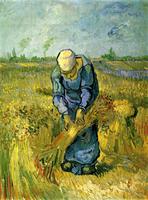
Expert Analysis: "Arles View from the Wheat Fields" by Vincent van Gogh
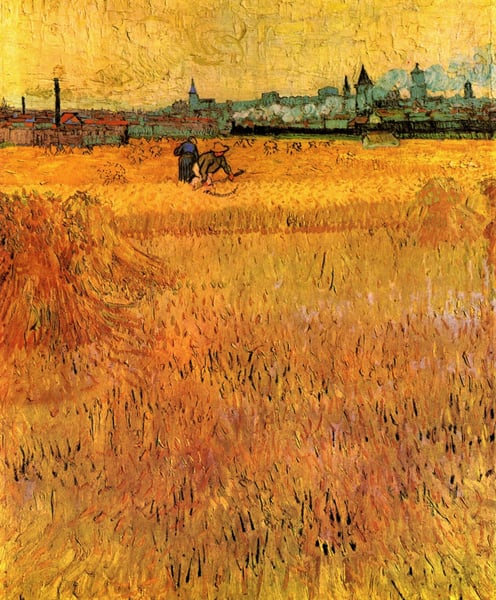
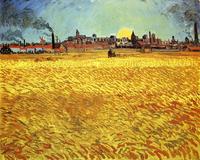
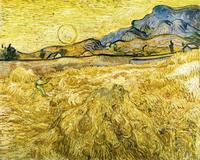
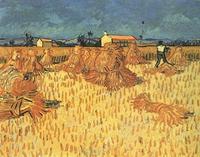
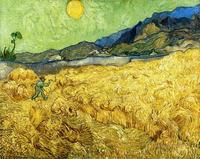
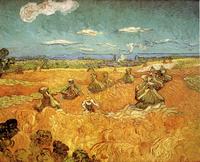
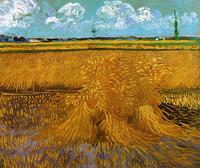
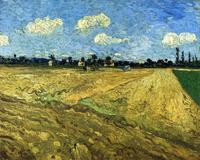
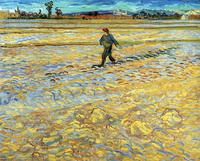
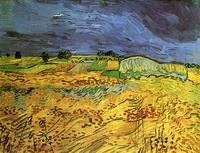
This landscape stands as a quintessential example of Post-Impressionism, the movement in which van Gogh moved beyond naturalistic representation to convey emotional and psychological depth. Painted during his intensely productive Arles period (1888–1889), the work captures the rugged, sun-drenched countryside of southern France. Its significance lies in van Gogh’s revolutionary use of color and brushwork: the wheat fields are rendered in thick, swirling strokes of yellow and gold, set against a vivid blue sky that pulsates with energy. The complementary palette (yellow-purple accents, blue-orange contrasts) creates a vibrating, almost hallucinatory intensity, reflecting the artist’s belief that color could express the “soul” of a scene. This approach—prioritizing subjective emotion over optical accuracy—defined Post-Impressionism’s break from Impressionism. The composition, with its high horizon and rhythmic, diagonal lines leading the eye toward the town of Arles, transforms an ordinary rural view into a powerful metaphor for van Gogh’s own spiritual and creative fervor. The work is thus significant not only as a masterful landscape but as a testament to van Gogh’s radical vision, which would later influence Expressionism and modern art’s embrace of inner life over outer appearance.