
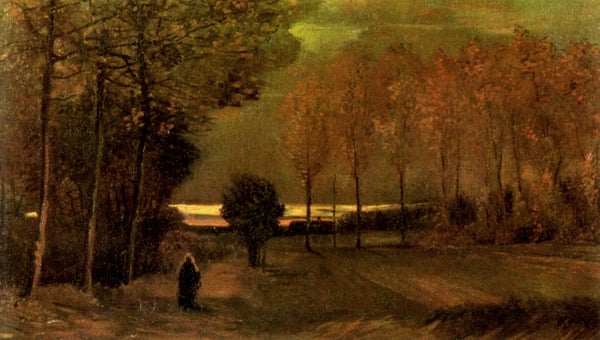
Expert analysis of Vincent van Gogh’s Autumn Landscape at Dusk
Style: Realism · Genre: landscape
Expert Analysis: "Autumn Landscape at Dusk" by Vincent van Gogh
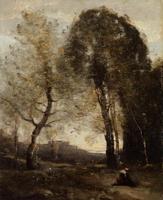
Although Vincent van Gogh is best known for his later Post-Impressionist works, this painting—classified strictly within the Realist style—represents a crucial early phase in his development. Created as a landscape, the work stands out for its disciplined adherence to observable nature while already hinting at the emotional intensity that would define his mature output.
Significance within Realism:
During his early career in the Netherlands (c. 1881–1885), van Gogh embraced Realism’s core tenets: truthful representation of rural life, subdued earthy palettes, and a focus on the everyday. Autumn Landscape at Dusk exemplifies this period through its somber twilight tones—deep browns, muted ochres, and grays—that capture the transient light of a fading autumn day. The composition is straightforward: a low horizon, bare trees, and a heavy sky, all rendered with a deliberate lack of idealization. This honesty to the physical world was van Gogh’s way of paying homage to his Realist hero Jean-François Millet.
What makes it significant:
- Transitional technique: Even within realist constraints, van Gogh’s brushwork here is more expressive than that of his strict Realist contemporaries. The sky is built of visible, rhythmic strokes that suggest a personal urgency, prefiguring his later vibrant impasto.
- Psychological depth: The dusk setting infuses the landscape with a quiet melancholy—a sense of isolation that mirrors van Gogh’s own state of mind. This was a departure from typical Realist landscapes, which often remained detached and documentary.
- Roots of genius: Autumn Landscape at Dusk is essential for understanding van Gogh’s evolution. It shows him mastering the Realist vocabulary (dark palette, humble subject) before breaking free into the color and motion of his Arles period. Without this grounding in faithful observation, his later symbolic use of nature would lack its visceral anchor.
In sum, this work is significant as a key stepping-stone: a Realist landscape that respects the visible world while already trembling with the emotional charge that would make van Gogh one of art history’s most transformative figures.
Museum / Gallery
Visually similar
20 works with related composition and palette
Country Lane with Two Figures
Vincent van Gogh
Autumn Landscape
Vincent van Gogh
The Home of the Heron
George Inness
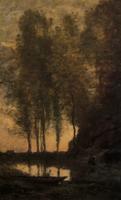
The Ferryman Tying his Boat
Camille Corot
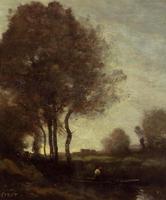
Fishermen in a Boat
Camille Corot
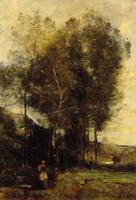
Cowherd in a Dell, Souvenir of Brittany
Camille Corot
Souvenir of Brittany
Camille Corot
Forest Road near Oranjewoud
Jan Mankes
Horseman in the Forest
Camille Pissarro
Landscape
Paul Trouillebert
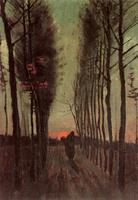
Avenue of Poplars at Sunset
Vincent van Gogh
View of the Villa Borthese
Gustave Moreau
Morning, Woman Hearding Cows
Camille Corot
The Bruges Canal
Charles Warren Eaton
The Home of the Heron
George Inness
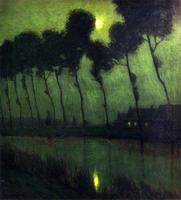
Moonlight at the canal in Bruges
Charles Warren Eaton
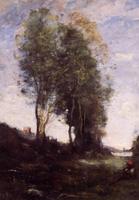
Shepherd Resting
Camille Corot
Road near the canal
Johan Hendrik Weissenbruch
A Cow and its Keeper
Camille Corot
Souvenir of Italy
Camille Corot