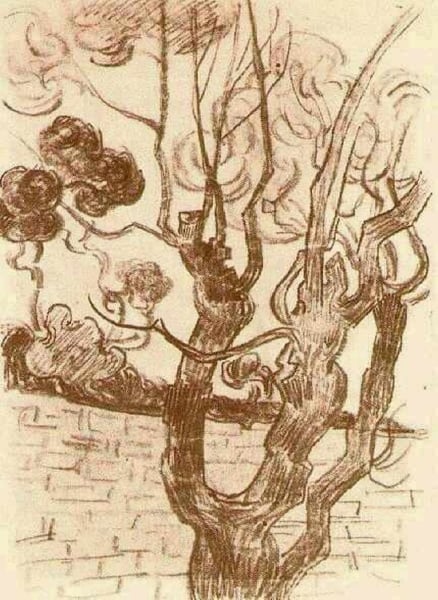
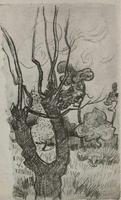
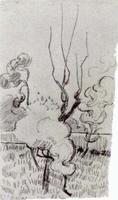
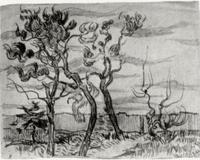
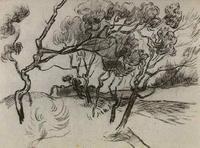
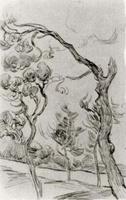
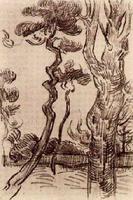
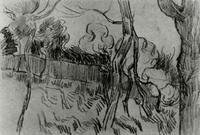
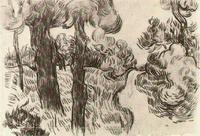
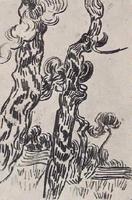
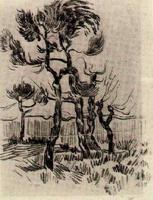
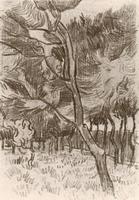
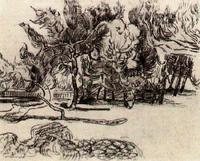
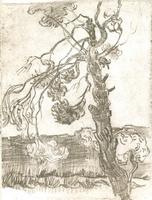
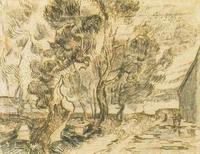
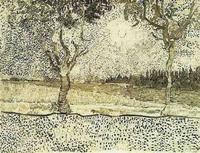
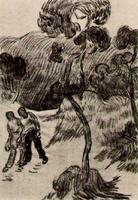
The significance of “Treetop Seen against the Wall of the Asylum” lies in its dual role as both a Post-Impressionist study and a deeply personal document of Vincent van Gogh’s creative process during his confinement. As a sketch and study, the work strips away the polished finish of a full painting, revealing the raw, exploratory energy that defines van Gogh’s approach to nature and architecture. The juxtaposition of the organic treetop against the rigid asylum wall captures a fundamental tension in his late work: the struggle between life and containment, growth and confinement.
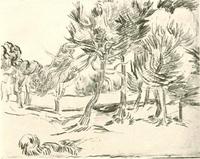
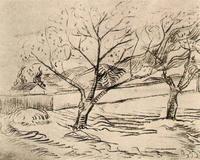
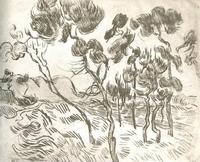
Within the Post-Impressionist framework, this piece exemplifies van Gogh’s shift from naturalistic representation toward expressive line and form. The loose, rapid strokes typical of a study allow us to see how he builds texture and movement from simple marks—a method that would later culminate in his iconic, swirling landscapes. Because it is a study, the artwork offers rare insight into his working method: the way he used the asylum’s immediate surroundings—a single treetop against a wall—as a motif to explore rhythmic pattern, contrast, and emotional resonance.
Ultimately, the work’s significance is its intimate documentary value: it is a visual diary entry from one of art history’s most turbulent periods, showing how van Gogh transformed his limited, institutionalized view into a powerful Post-Impressionist meditation on space, isolation, and the indomitable will to create.