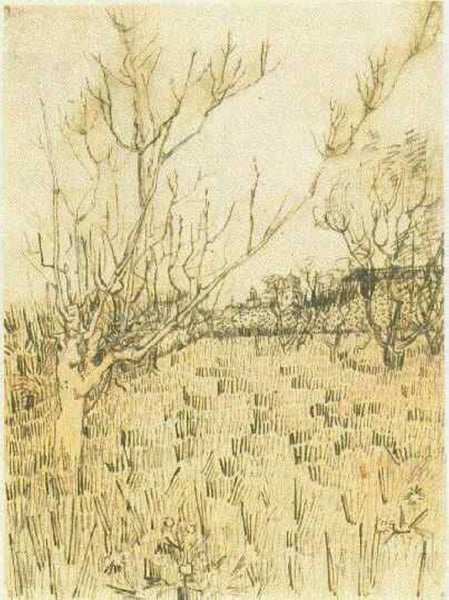
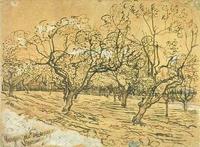
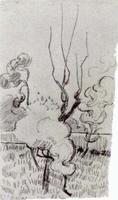
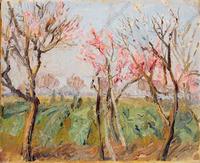
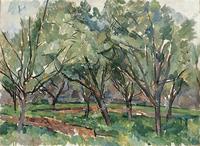
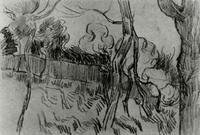
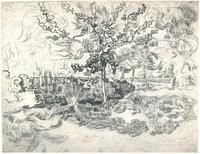
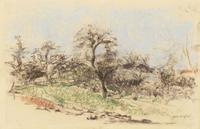
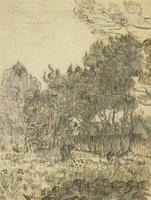
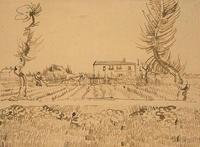
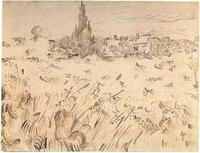
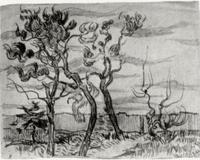
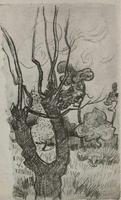
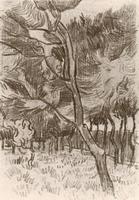
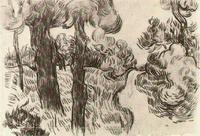
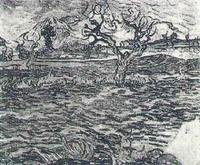
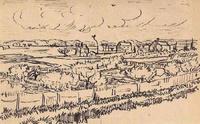
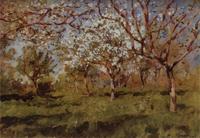
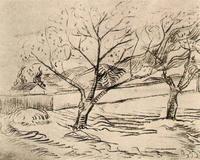
This sketch and study by Vincent van Gogh, Orchard with Arles in the Background, is a significant work within Post-Impressionism for its raw, preparatory insight into the artist’s process during a pivotal period. As a study rather than a finished painting, it reveals van Gogh’s direct, unfiltered engagement with the landscape—capturing the rapid notation of form, light, and atmosphere that underpins his more resolved canvases. The inclusion of Arles in the background situates the work within his prolific southern French period (1888–1890), where he sought to infuse nature with emotional intensity through energetic line work and heightened color contrasts. This genre of sketch and study is crucial for understanding van Gogh’s transition from Impressionist observation to a more personal, symbolic expression, exemplifying Post-Impressionism’s shift toward subjective representation and the primacy of the artist’s hand.