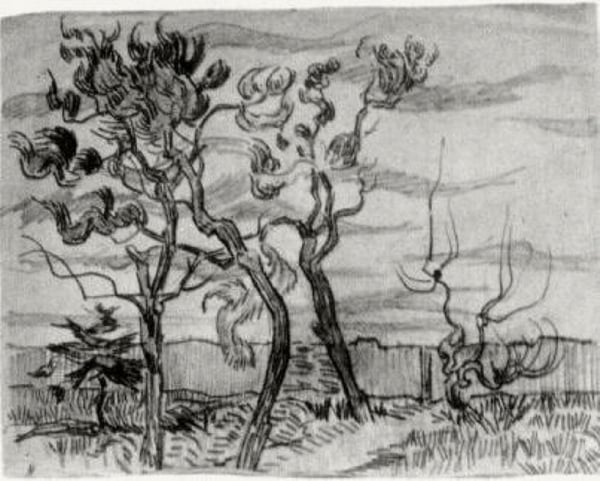
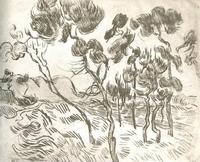
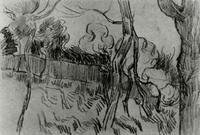
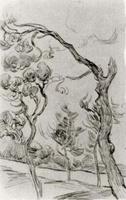
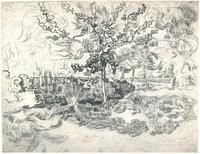
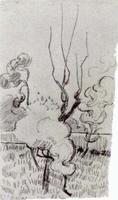
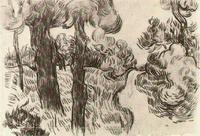
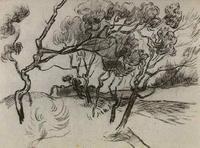
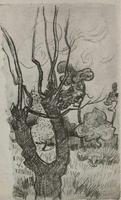
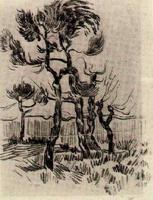
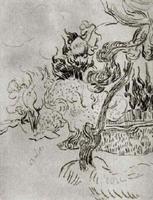
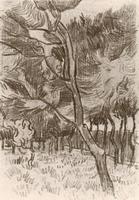
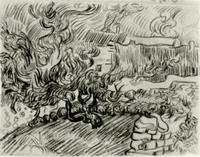
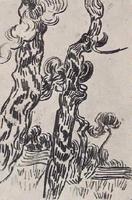
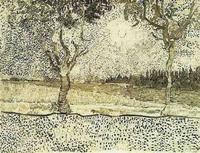
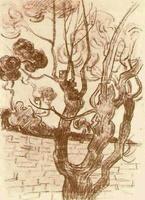
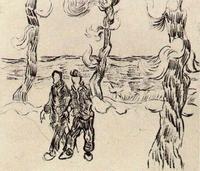
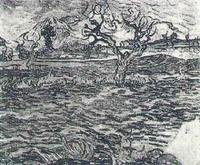
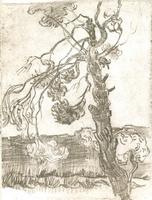
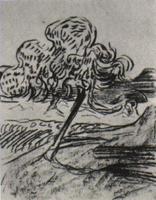
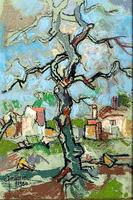
This sketch-and-study by Vincent van Gogh, executed during his voluntary confinement at the asylum in Saint-Rémy-de-Provence, holds a unique place within his Post-Impressionist oeuvre. As a study, it reveals the artist’s working method: a direct, unpolished observation of nature that would later inform more finished canvases. The subject—pine trees rising before the asylum’s enclosing wall—is thematically charged. The wall, rendered as a stark horizontal barrier, contrasts with the vertical, twisting energy of the trees, creating a visual tension between confinement and organic vitality. In true Post-Impressionist fashion, van Gogh subordinates literal description to expressive line and rhythm. This work’s significance lies in its rawness: it captures the immediacy of the artist’s vision, the restless mark-making that defines his style, and the psychological resonance of finding freedom within a bounded space. It is a document of process as much as a finished statement, offering a privileged glimpse into van Gogh’s disciplined yet impassioned approach to form and emotion.