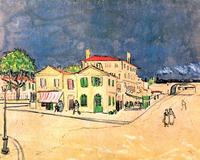
Expert Analysis: "The Rispal Restaurant at Asnieres" by Vincent van Gogh
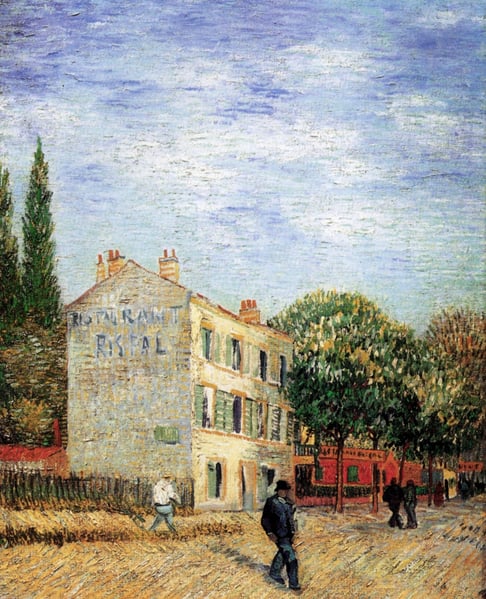
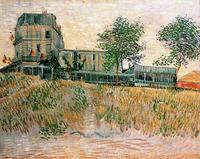
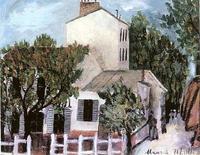
This cityscape exemplifies van Gogh’s pivotal transition between Post-Impressionism and Neo-Impressionism during his time in Asnières (1887). Its significance lies in how the artist synthesizes two seemingly divergent approaches: the structured, scientific color theory of Neo-Impressionism (derived from Seurat and Signac) and the emotive, expressive force that would define his mature Post-Impressionist style.
Van Gogh applies short, divided brushstrokes reminiscent of pointillism to render the façade of the Rispal restaurant, the awning, and the surrounding pavement. Yet he does not follow strict optical mixture—instead, he heightens contrast with bold complementary hues (e.g., blues against warm yellows and reds), creating a vibrant, almost flickering surface that conveys the lively atmosphere of a suburban Parisian eatery. The composition, anchored by the elongated building and receding street, demonstrates his interest in modern leisure spaces—a theme shared with other Post-Impressionists—while the energetic, rhythmic application of paint prefigures his later, more agitated brushwork.
What makes this work significant is its hybrid role: it shows van Gogh mastering Neo-Impressionist technique without sacrificing personal expression. The restaurant becomes a study in light, color, and modern life, yet the visible, deliberate strokes reveal the artist’s hand and emotional engagement, bridging the gap between systematic color theory and the raw subjectivity that would define his greatest works.