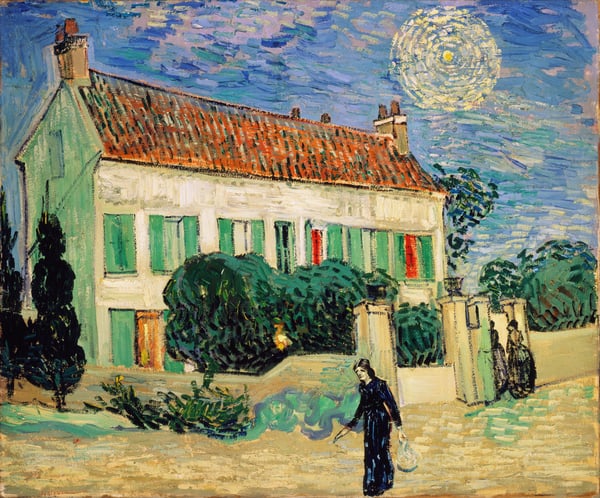
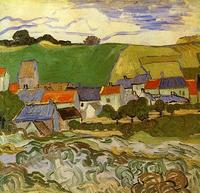
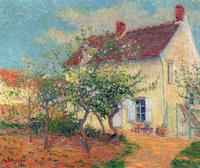
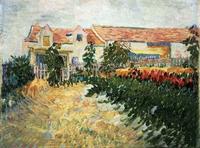
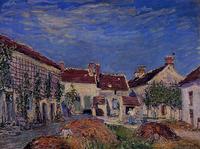
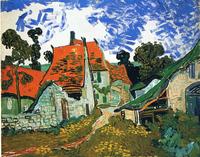
Analysis of "White House at Night" by Vincent van Gogh
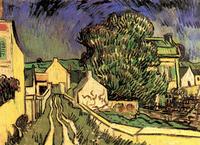
As a Post-Impressionist cityscape, White House at Night exemplifies van Gogh’s departure from naturalistic representation in favor of heightened emotional and symbolic expression. The work is significant for its treatment of a seemingly ordinary nocturnal subject—a white house—through the lens of Post-Impressionism’s core concerns: subjective color, expressive brushwork, and the manipulation of light to convey mood. The cityscape genre here is not merely documentary; it becomes a vehicle for psychological intensity, with the stark contrast between the luminous white facade and the deep, vibrating darkness of the surrounding night sky. This tension between stillness and energy, light and shadow, underscores van Gogh’s ability to transform a familiar urban scene into a charged, meditative vision. The painting stands as a key example of how Post-Impressionism reimagined everyday life through the artist’s inner experience, making the mundane profound.