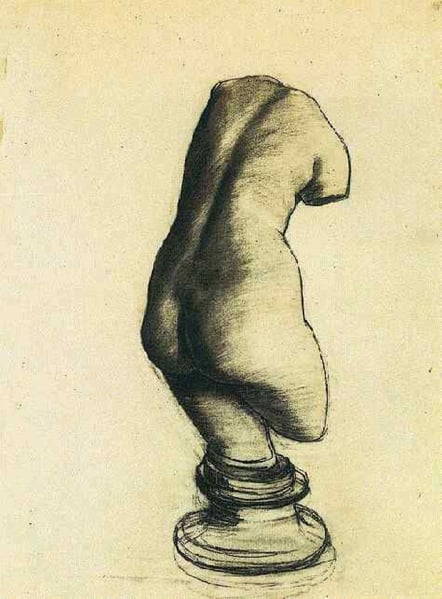
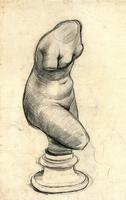
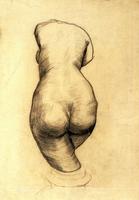
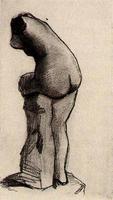
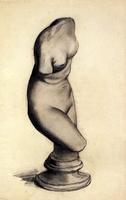
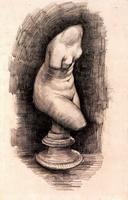
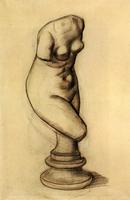
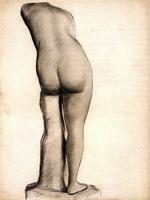
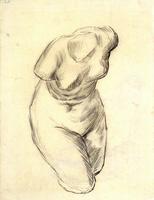
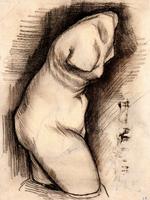
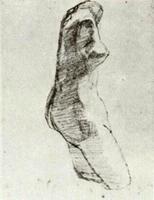
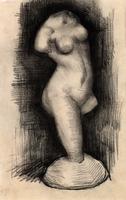
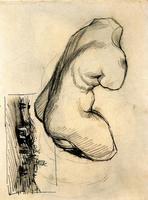
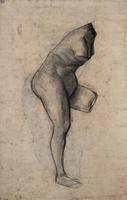
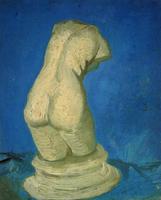
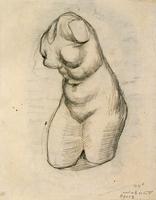
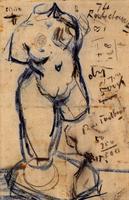
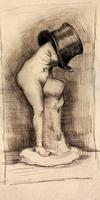
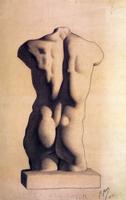
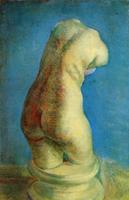
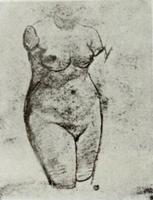
Based solely on the provided facts—that this is a Realist sketch and study titled Torso of Venus by Vincent van Gogh—the artwork’s significance lies in its demonstration of van Gogh’s disciplined adherence to academic Realist principles during his early training, a foundation that later fueled his expressive Post-Impressionist innovations. As a sketch and study, it showcases his rigorous attention to classical anatomy and chiaroscuro, capturing the idealized form of a Venus torso with precise, observational accuracy. Within the Realist style, the piece is significant for revealing van Gogh’s technical proficiency in translating three-dimensional sculptural volume onto a two-dimensional surface, a skill often overshadowed by his later vibrant color and brushwork. Moreover, the choice of a classical subject—a common academic exercise—places this work in dialogue with the 19th-century European atelier tradition, highlighting van Gogh’s deliberate study of form and proportion before he broke into his signature emotionally charged aesthetic. This study thus serves as a crucial, grounded counterpoint to his more famous oeuvre, underscoring his mastery of realist draftsmanship as the bedrock of his artistic evolution.