
Expert analysis of Vincent van Gogh’s Venus in a Top Hat
Style: Post-Impressionism · Genre: sketch and study
Expert Analysis of "Venus in a Top Hat" by Vincent van Gogh
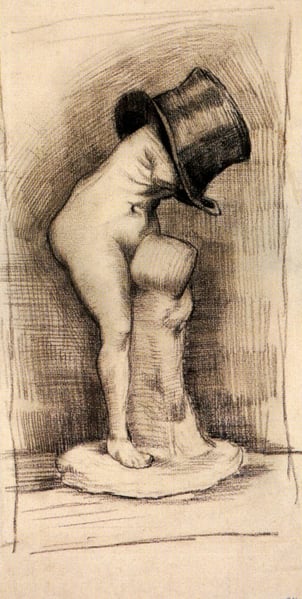
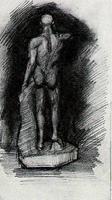
As a work executed in the Post-Impressionist style and classified as a sketch and study, "Venus in a Top Hat" offers a revealing glimpse into Vincent van Gogh’s experimental process and his subversion of classical ideals. The significance of this piece lies in its deliberate bridging of high art tradition with modern, everyday iconography—a hallmark of van Gogh’s mature approach.
Stylistic Significance within Post-Impressionism
Van Gogh’s sketch embodies the Post-Impressionist impulse to move beyond naturalistic representation toward personal expression. The juxtaposition of Venus, the archetypal goddess of love and beauty, with a top hat—a symbol of bourgeois masculinity and modern urban life—creates a dissonance typical of van Gogh’s willingness to challenge conventional subject matter. This irreverent fusion reflects Post-Impressionism’s broader interest in symbolism, emotional resonance, and the artist’s subjective vision. The sketch format allows van Gogh to explore this idea rapidly, capturing the essential tension without the finish of a full painting, thus emphasizing raw expressive energy over polished detail.
Genre as Sketch and Study: Insights into Van Gogh’s Method
As a study, this work is significant for its demonstration of van Gogh’s preparatory thinking. Sketches in Post-Impressionism often served as testing grounds for composition, line, and conceptual play. Here, the loose, energetic strokes—likely in pen or charcoal—reveal his characteristic dynamic linework, which would later translate into the thick, rhythmic brushstrokes of his paintings. The choice of Venus juxtaposed with a modern accessory suggests that van Gogh was not merely copying a classical trope but reimagining it through a contemporary lens, a practice that aligns with his desire to infuse traditional subjects with new life and personal meaning.
Conceptual and Historical Significance
"Venus in a Top Hat" stands out as an early or informal example of van Gogh’s tendency to deconstruct mythological imagery—a move that would influence later modernist appropriations. By placing a top hat on Venus, van Gogh comments on the artificiality of societal roles and the collision of timeless beauty with fleeting fashion. The sketch’s unfinished quality underscores the spontaneity of this insight, making it a document of an idea in motion rather than a finished statement. In the context of Post-Impressionism, such works were crucial for pushing boundaries: they prioritized the artist’s inner vision over academic correctness, paving the way for twentieth-century movements like Expressionism and Surrealism.
Conclusion
Though executed as a modest sketch, "Venus in a Top Hat" encapsulates van Gogh’s revolutionary spirit. Its significance lies in the way it uses the informal genre to probe the intersection of classical iconography and modern identity, all while showcasing the vigorous, emotional linework that defines his Post-Impressionist legacy. This work is not merely a preparatory doodle but a bold conceptual gambit—a miniature manifesto of van Gogh’s belief that art should be alive, irreverent, and deeply personal.
Museum / Gallery
Visually similar
20 works with related composition and palette
Plaster Statuette
Vincent van Gogh
Torso of Venus
Vincent van Gogh
Torso of Venus
Vincent van Gogh
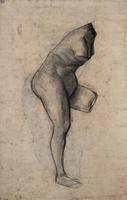
Venus
Vincent van Gogh
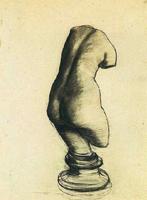
Torso of Venus
Vincent van Gogh
Nude Holding Her Leg
Paul-Albert Besnard
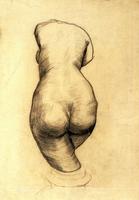
Torso of Venus
Vincent van Gogh
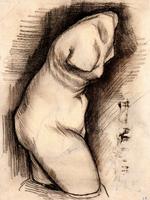
Torso of Venus
Vincent van Gogh
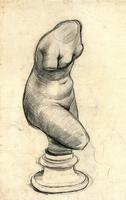
Torso of Venus
Vincent van Gogh
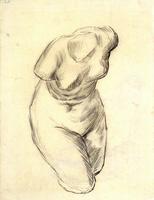
Torso of Venus
Vincent van Gogh
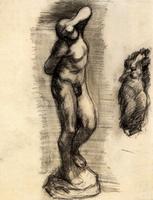
Young Slave
Vincent van Gogh
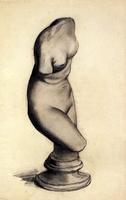
Torso of Venus
Vincent van Gogh
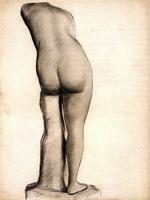
Venus
Vincent van Gogh
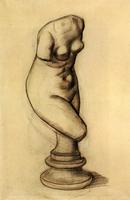
Torso of Venus
Vincent van Gogh
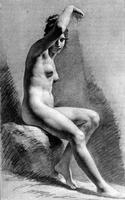
Female Nude Raising her Arm
Pierre-Paul Prud'hon
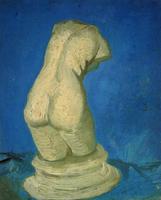
Plaster Statuette of a Female Torso
Vincent van Gogh
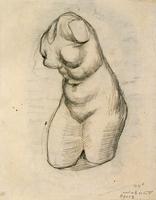
Torso of Venus
Vincent van Gogh
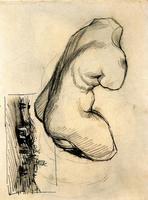
Torso of Venus and a Landscape
Vincent van Gogh
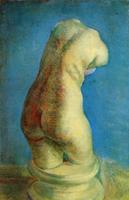
Plaster Statuette of a Female Torso
Vincent van Gogh
Plaster Statuette
Vincent van Gogh