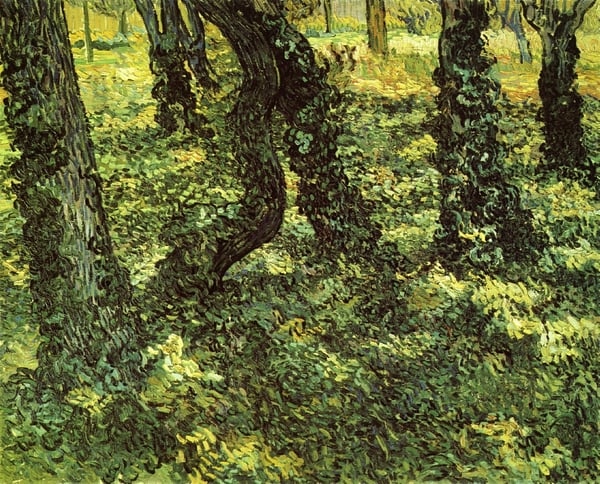
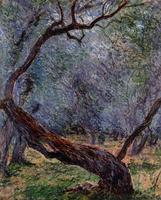
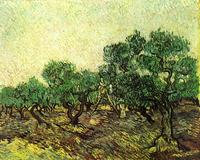
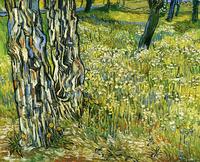
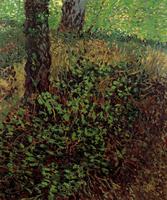
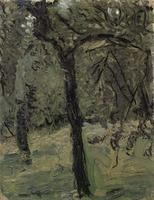
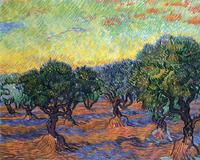
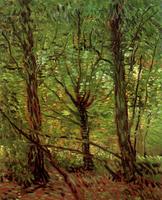
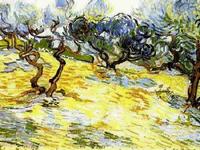
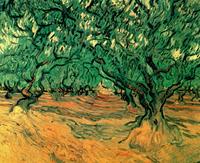
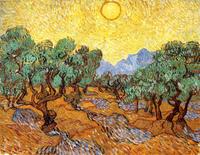
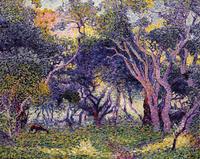
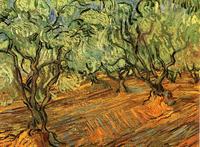
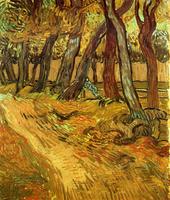
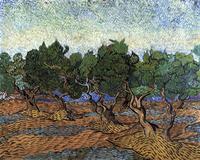
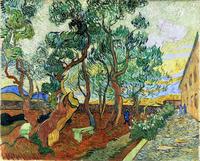
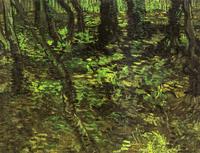
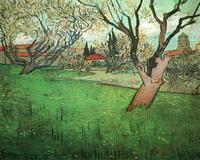
This artwork is significant for its embodiment of Post-Impressionist ideals within the landscape genre. While the supplied facts do not specify the painting's color or brushwork, van Gogh’s contribution to Post-Impressionism is defined by a shift away from naturalistic representation toward subjective, emotional expression. Here, the motif of tree trunks entwined with ivy—a common but evocative landscape subject—allows him to explore the organic vitality of nature. The ivy’s clinging growth can be read as a metaphor for resilience or entanglement, typical of the symbolic weight van Gogh gave to humble natural elements. As a Post-Impressionist landscape, the work distances itself from mere optical observation, instead emphasizing rhythm, texture, and personal vision—key innovations that would influence early modern art.