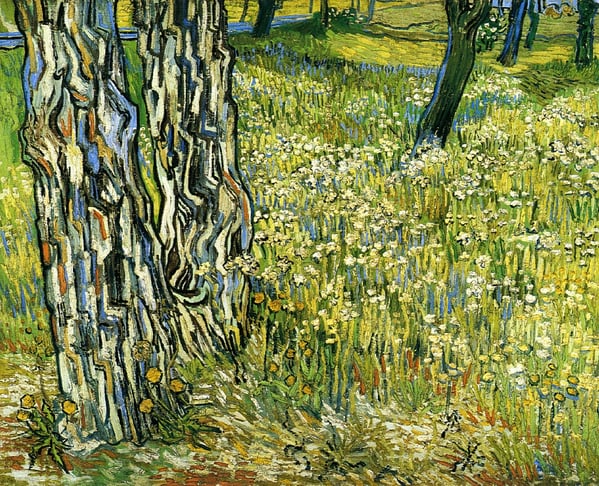
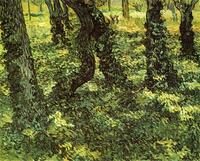
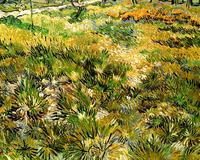
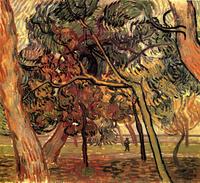
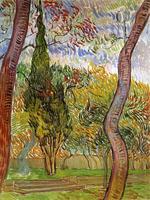
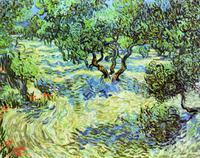
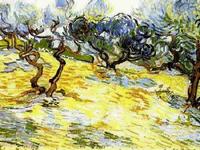
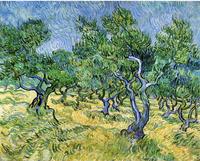
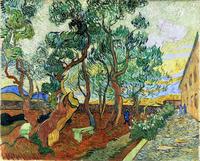
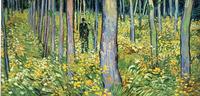
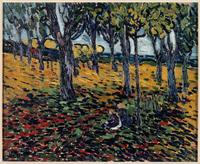
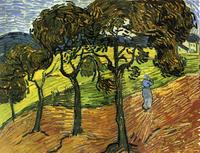
"Tree Trunks in the Grass" by Vincent van Gogh is a landscape executed in the Post-Impressionist style. As a work by van Gogh, its significance lies in the way it exemplifies the core tenets of Post-Impressionism: a deliberate departure from the naturalistic depiction of nature characteristic of Impressionism, toward a more expressive and subjective approach. Van Gogh’s landscapes are renowned for transforming ordinary scenes into emotionally charged compositions through bold, rhythmic brushwork and intense, symbolic use of color. Within the genre of landscape, this painting would have served as a vehicle for van Gogh’s personal vision, elevating the everyday natural motif into a statement of inner feeling and psychological depth. The title itself focuses on specific, grounded elements—tree trunks and grass—suggesting a desire to find profound meaning in the humble, often overlooked details of the natural world, a hallmark of van Gogh’s contribution to Post-Impressionist art.