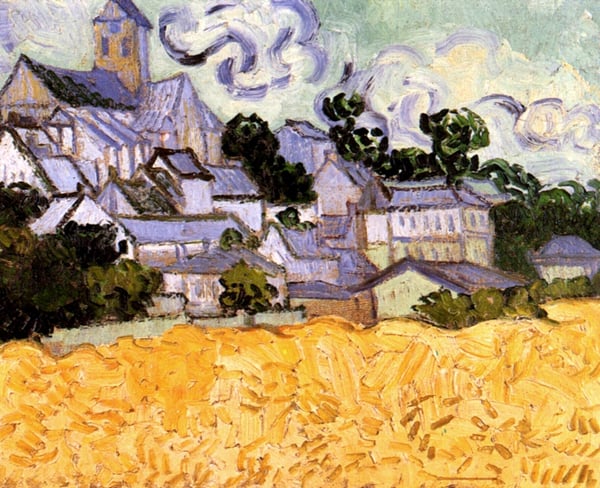
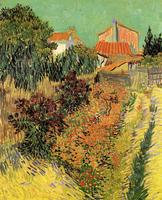
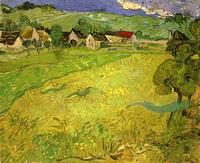
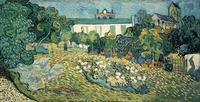
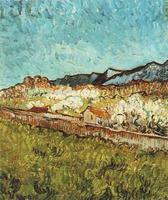
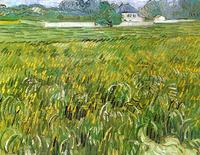
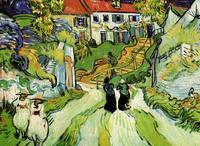
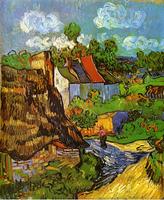
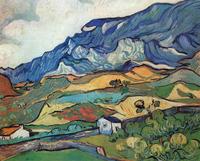
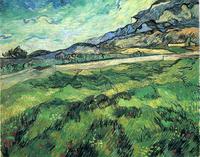
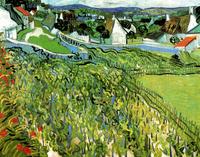
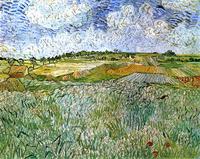
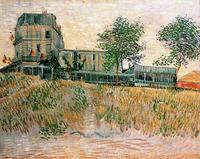
"View of Auvers with Church" is a quintessential example of Vincent van Gogh's Post-Impressionist cityscape, demonstrating the movement's break from the naturalism of Impressionism. The work's significance lies in how van Gogh transforms a mundane village view into a deeply expressive, personal vision. Through his characteristic swirling brushwork and intensified, often arbitrary color choices, he imbues the scene with emotional resonance—a hallmark of Post-Impressionism. The church, a central motif, is rendered not with photographic accuracy but as a rhythmic, almost vibrating form that reflects the artist's inner state rather than mere external reality. This painting exemplifies how Post-Impressionist cityscapes used urban subjects as a vehicle for psychological and symbolic expression, prioritizing subjective experience over optical fidelity. Van Gogh's treatment of the landscape and architecture here—layered with thick impasto and guided by a dynamic line—marks a pivotal moment where the cityscape becomes a canvas for modern emotional intensity, solidifying his legacy within the movement.