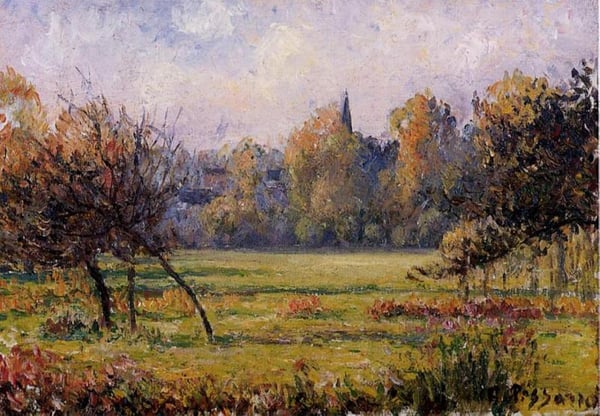
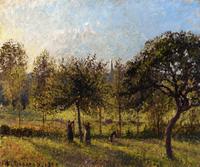
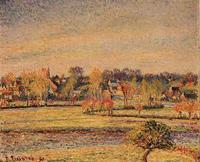
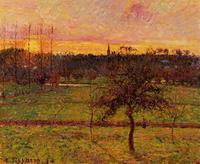
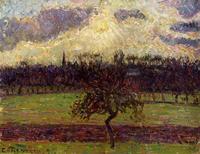
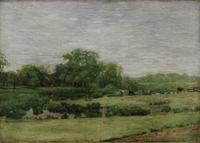
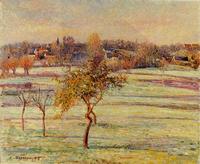
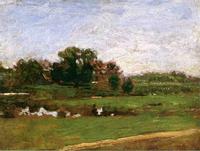
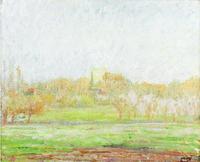
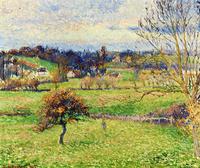
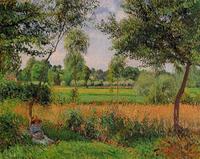
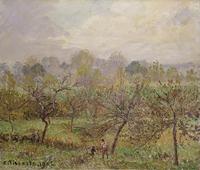
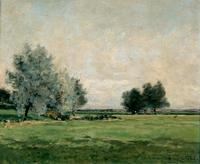
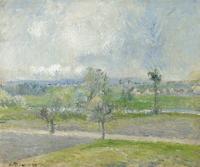
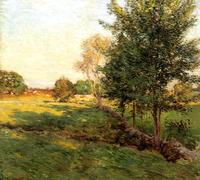
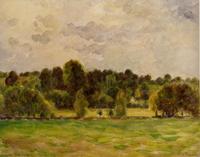
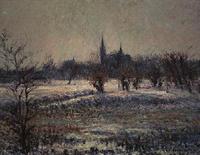
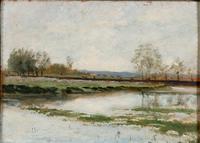
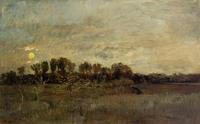
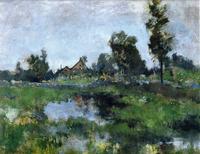
This artwork, Landscape at Bazincourt by Camille Pissarro, is a quintessential example of Impressionist painting within the landscape genre. Its significance lies in how it embodies the core principles of the Impressionist style: a focus on capturing the fleeting effects of natural light, atmospheric conditions, and the immediacy of a rural scene. Pissarro, a central figure in the movement, employs loose, visible brushstrokes and a bright, often muted palette to render the countryside not as a detailed topographical record, but as a sensory experience of color and air. As an Impressionist landscape, the work breaks from academic traditions of polished finish and heroic subject matter, instead elevating an ordinary view of Bazincourt into a study of perception. This approach contributes to the movement’s radical redefinition of painting, emphasizing the artist’s personal, momentary response to nature over literal representation.