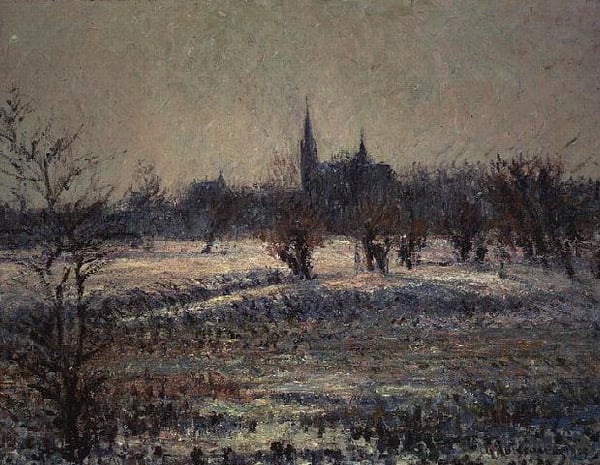
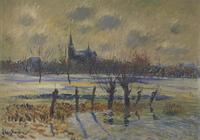
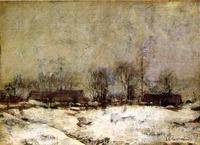
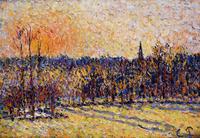
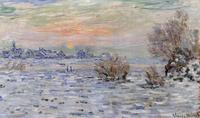
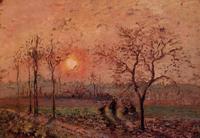
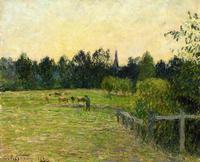
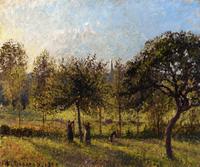
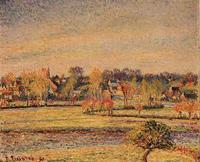
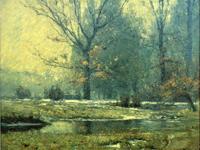
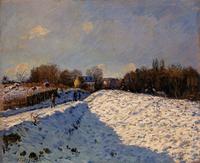
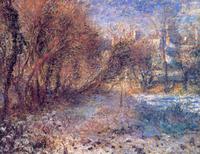
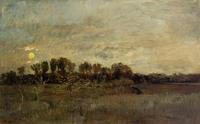
"White Frost" by Gustave Loiseau stands as a compelling example of Post-Impressionist landscape painting. Within this style, the work is significant for its focused exploration of atmospheric effects and the ephemeral quality of light on a frost-covered scene. Loiseau’s treatment of the landscape likely moves beyond the Impressionist aim of capturing a momentary sensation; instead, it emphasizes a personal, structured interpretation of nature through deliberate color choices and brushwork. The subject of frost—a transient, crystallized state—allows Loiseau to demonstrate Post-Impressionism’s concern with surface pattern, tactile texture, and the emotional resonance of a subdued, wintry palette. By concentrating on this specific natural phenomenon, the artwork reinforces the period’s shift toward subjective expression and the artist’s unique vision, even while remaining firmly rooted in the landscape genre.