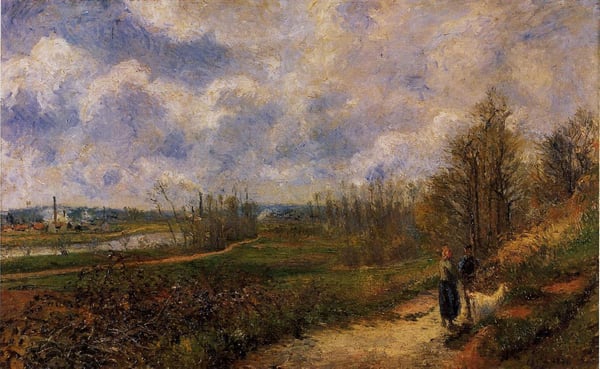
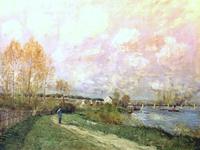
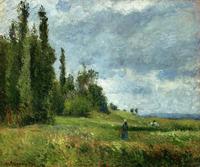
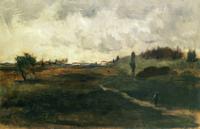
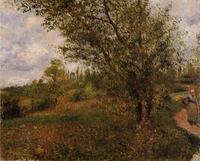
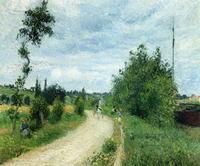
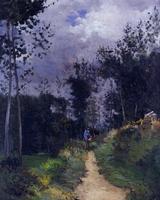
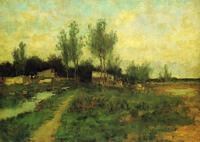
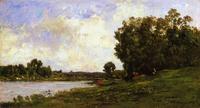
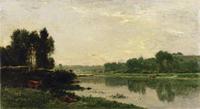
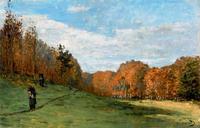
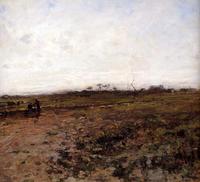
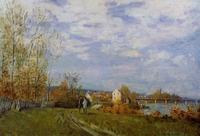
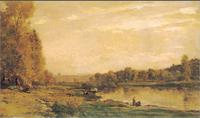
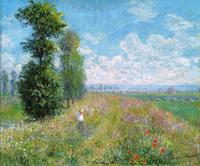
Camille Pissarro's "Path to Le Chou, Pontoise" (Impressionism, landscape) is significant for epitomizing the core Impressionist commitment to capturing transient atmospheric effects within a humble, everyday rural scene. As a leading figure of the movement, Pissarro here transforms a simple village path into a study of shifting light and color through rapid, broken brushwork. The work eschews the idealized, formal landscapes of academic painting, instead embracing the direct observation of nature and the fleeting moment—a hallmark that redefined landscape art in the late 19th century. Its focus on a mundane pathway rather than a dramatic vista underscores the Impressionist belief that modern beauty lies in the ordinary, making it a key example of how Pissarro helped elevate the genre of landscape to a vehicle for perceptual exploration.