Expert analysis of Isaac Levitan’s Twilight
Style: Realism · Genre: landscape
Expert Analysis: "Twilight" by Isaac Levitan
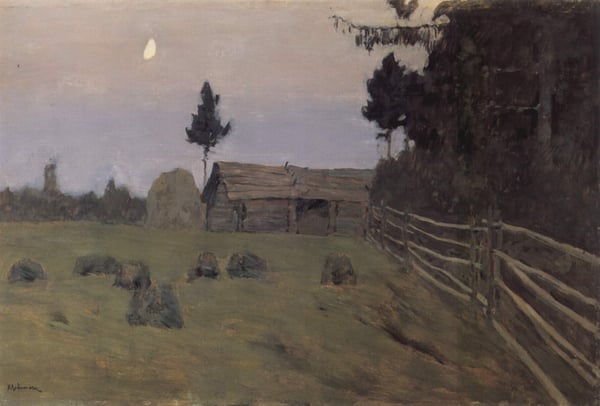
Isaac Levitan’s Twilight stands as a masterful expression of Russian Realism, a movement that sought to depict nature not merely as a backdrop but as a profound emotional and psychological landscape. Painted during the late 19th century—a period when Russian artists broke from academic conventions to embrace a more poetic, introspective naturalism—this work exemplifies Levitan’s ability to elevate a simple landscape into a meditation on solitude, time, and the sublime.
Significance within Realism and the Landscape Genre
Levitan’s Twilight is a landmark of what is often called “mood landscape” or peyzash nastroeniya. While Realism demanded fidelity to observed detail, Levitan’s genius lay in his selective focus: he captures the fleeting moment of dusk with muted earth tones, soft gradients of violet and gray, and a horizon that blurs into atmospheric haze. The composition is deliberately sparse—perhaps a winding river, a row of distant trees, or a solitary path—but precisely because of its restraint, the canvas becomes a vehicle for profound loneliness and quiet expectancy.
Unlike the heroic or dramatic landscapes of earlier Romanticism, Levitan’s scene is intimate, almost silent. The lack of human figures emphasizes nature’s vast indifference, yet the subtle glow along the horizon suggests a tender, lingering memory of daylight. This tension between presence and absence is central to the work’s emotional resonance.
Why It Matters
Twilight is significant because it demonstrates how Russian Realism transcended mere documentation. Levitan transforms a quotidian natural event—the fall of evening—into a universal metaphor for transition, loss, and hope. His brushwork is both delicate and assured: the soft scumbling of clouds, the reflective stillness of water (if present), the suggestion of wind through grass—all evoke a sensory experience that is at once specific (the landscapes of the Volga region or central Russia) and timeless.
In the broader history of landscape painting, Levitan bridges the empirical observation of the Barbizon School with the spiritual introspection that would later influence Symbolism and even early modernists. Twilight captures a moment of pure perceptual truth while simultaneously hinting at the ineffable—a hallmark of his most celebrated works and a key reason he is regarded as the poet of Russian nature.
Museum / Gallery
Visually similar
20 works with related composition and palette
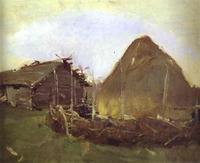
Haystack
Valentin Serov
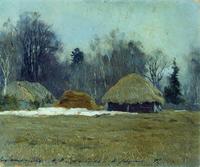
Early spring
Isaac Levitan
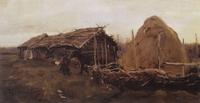
Haystack
Valentin Serov
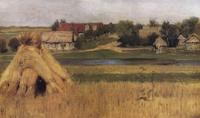
Sheaves and a Village Beyond the River
Isaac Levitan
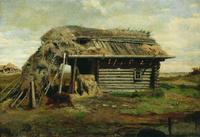
Peasant's House
Fyodor Vasilyev
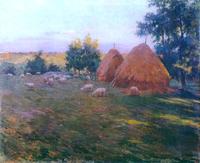
Haystacks
Willard Metcalf
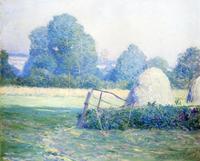
July Afternoon
Guy Rose
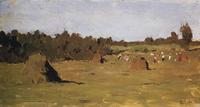
Haymaking
Isaac Levitan
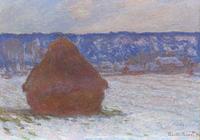
Stack of Wheat (Snow Effect, Overcast Day)
Claude Monet
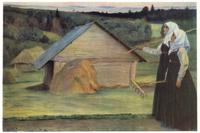
Summer
Mikhail Nesterov
Moonlit landscape
Isaac Levitan
Haystacks
Mikhail Nesterov
Landscape with buildings
Isaac Levitan
Stacks of Wheat (End of Day, Autumn)
Claude Monet
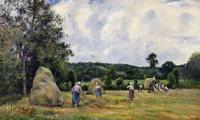
The Harvest at Montfoucault 2
Camille Pissarro
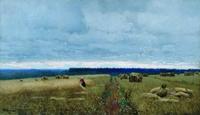
A dull day. Stubble.
Isaac Levitan
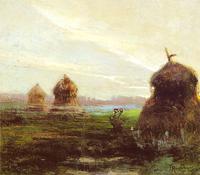
Pejzaz ze stogami
Ferdynand Ruszczyc
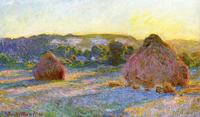
Stacks of Wheat (End of Summer)
Claude Monet
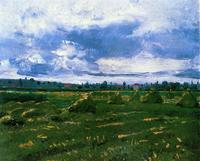
Wheat Fields with Stacks
Vincent van Gogh
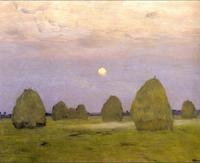
Twilight. Haystacks
Isaac Levitan