
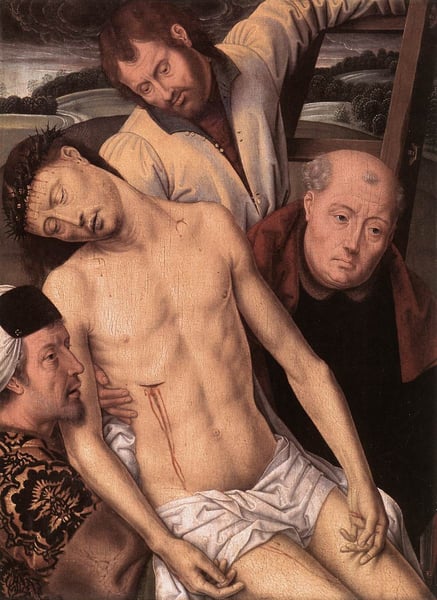
Expertenanalyse zu Hans Memlings Deposition (left wing of a diptych)
Stil: Northern Renaissance · Genre: religious painting
This analysis is based solely on the provided structured facts: Hans Memling’s Deposition (left wing of a diptych), a Northern Renaissance religious painting.
Expert Analysis of Hans Memling’s Deposition (left wing of a diptych)
The artwork is a masterful example of the Northern Renaissance, a period defined by obsessive attention to naturalistic detail, luminous oil glazes, and deeply personal devotional intimacy. As the left panel of a diptych, this Deposition would have originally faced a counterpart—often a donor portrait or a scene of the Resurrection—creating a private altarpiece for contemplative prayer.
Significance within the Northern Renaissance
-
Technical Virtuosity: Memling’s handling of oil paint achieves a jewel-like clarity. The delicate modeling of flesh in the dead Christ, the reflective quality of the rich fabrics (crimson, deep blue, gold brocade), and the meticulous rendering of Joseph of Arimathea’s beard or Nicodemus’s furrowed brow are hallmarks of the Flemish tradition. Every fold of linen and strand of hair is rendered with microscopic precision, inviting the viewer to marvel at the tangible reality of the holy scene.
-
Emotional Restraint and Compassion: Northern Renaissance religious works often emphasize human suffering, but Memling tempers the agony of the Crucifixion with a profound, serene sorrow. The Virgin Mary, supported by St. John, does not collapse in hysteria; instead, her grief is dignified and meditative. This restrained pathos aligns with the period’s trend toward devotio moderna—a personal, empathetic connection to biblical events. The composition guides the eye downward from Christ’s pale body to the weeping women, creating a slow, liturgical rhythm.
-
Compositional Innovation for a Diptych: As the left wing, this scene is cropped and asymmetrical, with the figures crowded near the bottom and the cross receding diagonally into a dark, gold-touched sky. This structure draws the viewer’s focus to the physical removal of Christ from the cross—a pivotal moment between death and burial. The lack of a full landscape or architectural setting concentrates the emotional weight on the hands and faces, making the scene feel intimate and immediate, as if one is kneeling beside the mourners.
Conclusion: Memling’s Deposition is significant not for shocking drama, but for its quiet, luminous humanity. It epitomizes the Northern Renaissance’s fusion of painstaking realism with profound spiritual tenderness, transforming a standard biblical narrative into a timeless meditation on loss and compassion. The diptych format further underscores its role as a tool for private devotion, where the viewer’s own gaze completes the prayer.
Museum / Gallery
Visuell ähnlich
20 Werke mit ähnlicher Komposition und Farbpalette
Descent from the Cross, left hand panel from the Deposition Diptych
Hans Memling
Lamentation
Rogier van der Weyden
Deposition Diptych (Small Deposition, left wing)
Hugo van der Goes
Lamentation over the Dead Christ
Bernardino Luini
Sepulcrum Christi
Pietro Perugino
The Dead Christ Supported by Angels
Francesco Ribalta
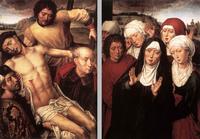
Diptych with the Deposition
Hans Memling
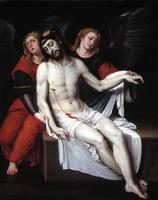
Cristo Muerto Sostenido Por Dos Ángeles
Francesco Ribalta
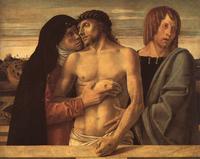
Dead Christ Supported by Madonna and St. John
Giovanni Bellini
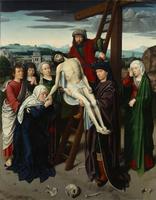
The Deposition
Gerard David
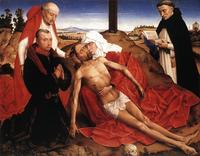
Lamentation
Rogier van der Weyden

The Lamentation of Christ
Jan van Hemessen

The Entombment
Peter Paul Rubens
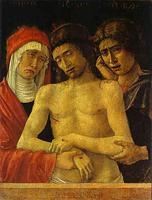
Pieta with the Virgin and St. John the Evangelist
Giovanni Bellini

The Lamentation
Gerard David
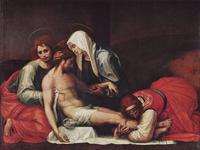
Pietà
Fra Bartolomeo
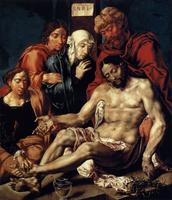
Lamentation of Christ
Maerten van Heemskerck
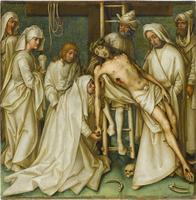
Descent from the Cross (Grey Passion-10)
Hans Holbein the Elder
Lamentation
Lucas Cranach the Elder
Passion Altarpiece (central panel)
Dirk Bouts