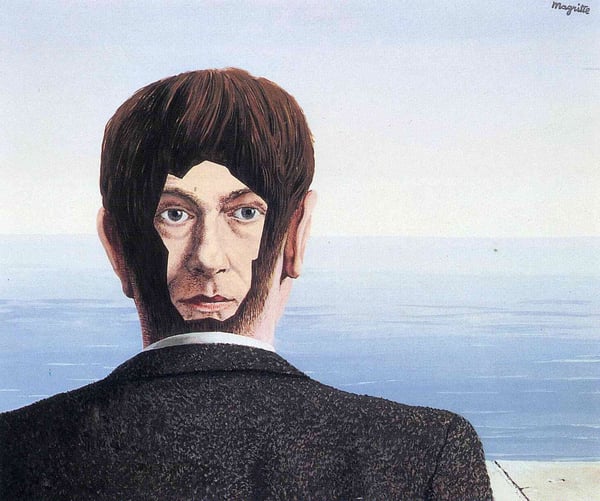
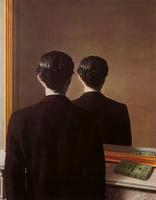
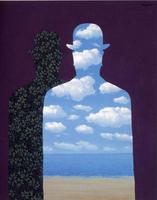
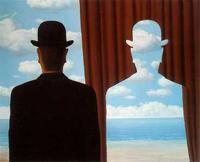
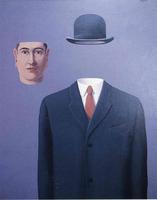
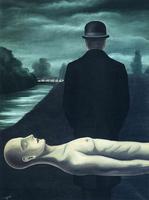
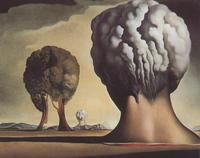
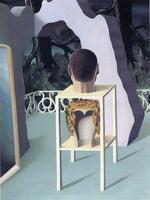
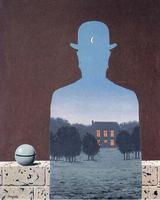
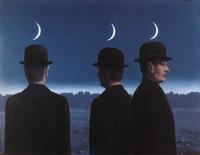
As a work of Surrealism created during the Brussels pre-war and war years, The Glass House is significant for its embodiment of the movement’s core principles within a particularly charged historical moment. Belonging to the genre of symbolic painting, the artwork transforms everyday domestic imagery into a vehicle for psychological and metaphysical inquiry—a hallmark of Surrealist practice. Its creation during a period of looming conflict and occupation likely infuses the symbolic elements with tension and ambiguity, reflecting the anxieties of the era. The work’s importance lies in how it distills the Surrealist aim of disrupting rational perception through a seemingly familiar scene, making it a key example of how Magritte’s pre-war and wartime output used symbolic visual language to question reality.