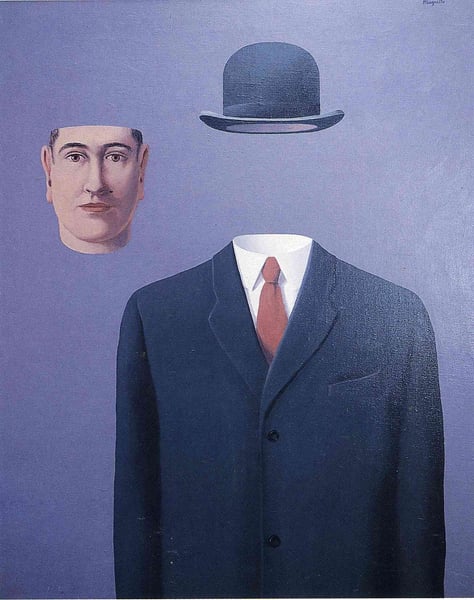
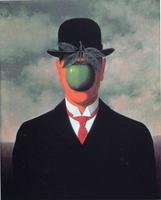
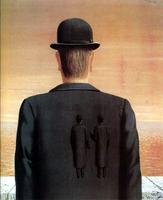
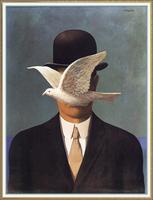
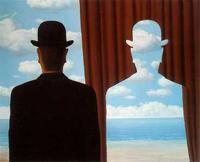
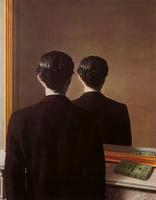
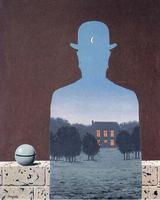
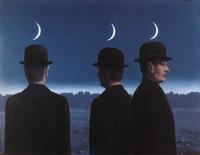
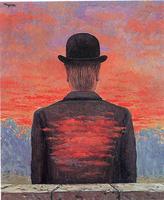
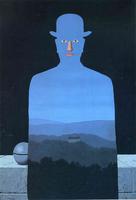
Based solely on the supplied structured facts, "The Pilgrim" by René Magritte is significant as a work of Surrealist symbolic painting from the artist’s Later Period.
Within Surrealism, symbolic painting serves to bypass rational thought and tap into the subconscious through deliberately enigmatic imagery. Magritte’s Later Period is particularly noteworthy for its refined, paradoxical treatment of everyday objects, where the familiar is rendered strange to challenge perception and meaning.
As a symbolic painting, "The Pilgrim" likely employs this mature Magrittean strategy: a pilgrim—a conventional figure of journey and devotion—becomes a vessel for Surrealist dislocation, subverting the expected narrative to provoke questions about identity, purpose, and reality. Its significance lies in how it embodies the core Surrealist goal of disrupting ordinary associations, while representing Magritte’s advanced, masterful command of that dissonance during his later, most philosophically rigorous phase.