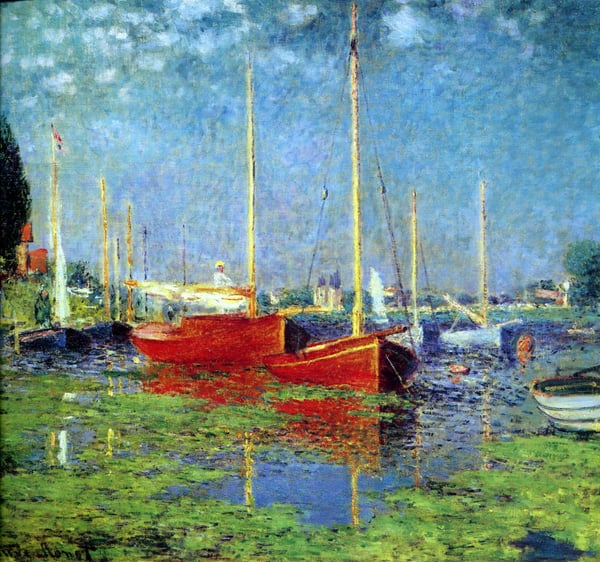
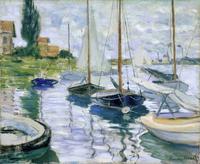
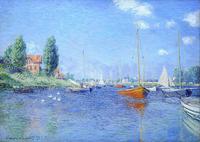
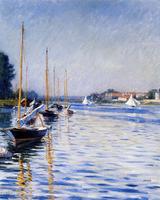
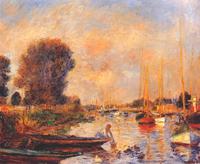
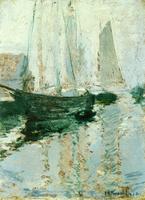
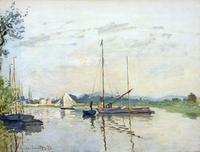
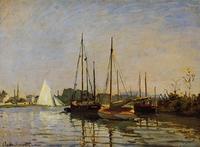
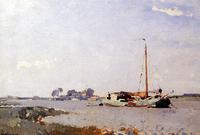
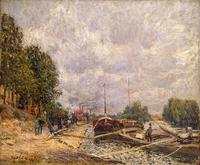
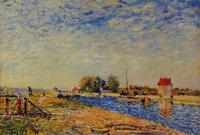
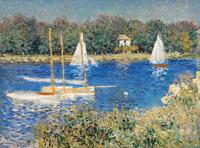
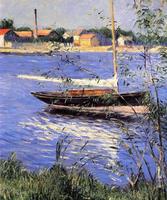
"Argenteuil" by Claude Monet is a quintessential example of Impressionism, a movement that revolutionized landscape painting in the late 19th century. As a landscape, the work captures a specific, everyday scene—likely the Seine riverbanks near Argenteuil—but its significance lies not in topographical accuracy, but in the artist's revolutionary approach to light, color, and atmosphere. Monet's brushwork is loose and rapid, prioritizing the fleeting impression of a moment over detailed representation. The painting demonstrates Impressionism's core aim: to record the shifting effects of natural light on forms and surfaces. By choosing an ordinary, suburban locale (a hallmark of the genre's modern shift), Monet elevates the transient beauty of a simple landscape into a study of perception itself. This work is significant because it embodies the movement's break from academic conventions, emphasizing pure sensory experience and the artist's subjective vision over narrative or moralizing content.