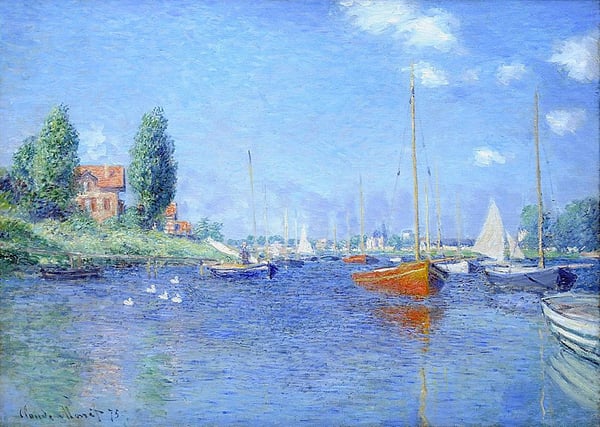
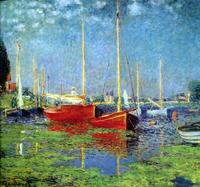
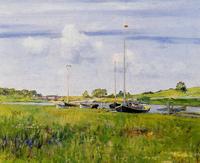
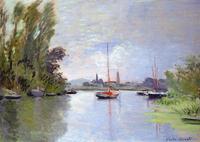
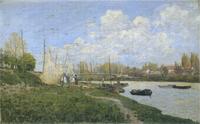
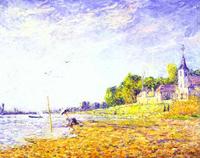
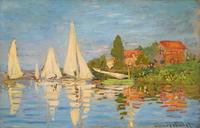
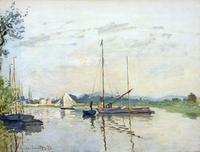
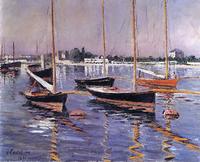
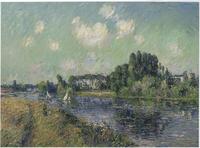
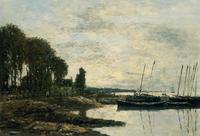
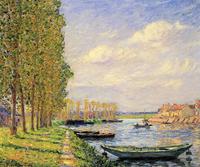
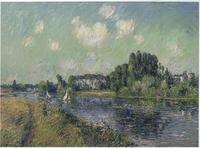
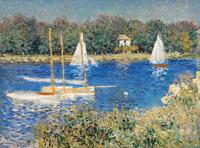
Claude Monet’s Red Boats, Argenteuil stands as a quintessential example of Impressionist landscape painting. Executed during a period when Monet was deeply engaged with capturing the fleeting effects of light and atmosphere on the water and sky, the work reflects the movement’s revolutionary break from academic conventions. In the Impressionist style, Monet prioritizes the sensory experience of a specific moment—the play of sunlight on the Seine, the reflection of red hulls on rippling water—over precise detail or narrative. The genre of landscape here is not merely a backdrop but a central subject, treated with loose, rapid brushstrokes that convey the shimmering vibrancy of nature. The artwork’s significance lies in its demonstration of Impressionism’s core tenets: an emphasis on plein air observation, the use of bright, unmixed colors to evoke luminosity, and a focus on modern leisure scenes (such as boating at Argenteuil). By rendering the red boats as bold accents within a harmonious composition of water, sky, and reflections, Monet epitomizes how Impressionism transformed landscape painting from a static record into a dynamic study of perceptual change.