Expert analysis of Claude Monet’s Banks of the Seine at Jeufosse, Autumn
Style: Impressionism · Genre: landscape
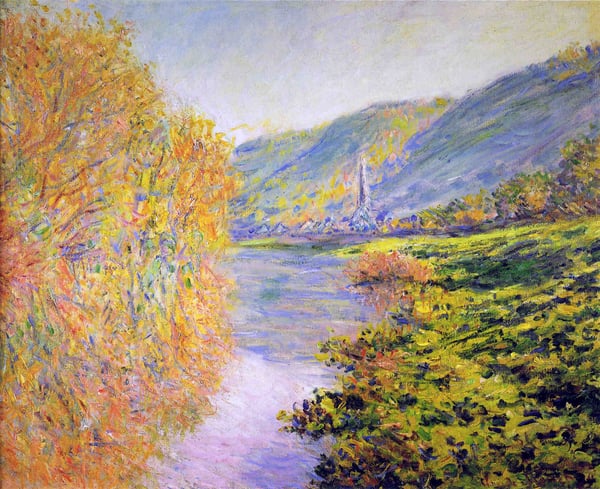
Claude Monet’s Banks of the Seine at Jeufosse, Autumn is a quintessential example of Impressionism’s revolutionary approach to landscape painting, demonstrating the artist’s mastery of capturing transient atmospheric effects and the passage of time. Painted during the 1880s, a period when Monet focused intensively on the Seine River valley, this work transforms a seemingly ordinary riverbank into a vibrant study of light, color, and seasonal change.
Significance within Impressionism:
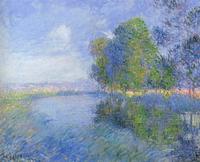
Monet’s technique here exemplifies the Impressionist break from academic tradition. Instead of delineating solid forms with precise outlines, he builds the composition from broken, visible brushstrokes of pure, unblended color. The autumn leaves are rendered in dabs of yellow, orange, and deep red, while the river reflects a shimmering mosaic of blues, greens, and soft pinks. The sky is no mere background but a dynamic field of shifting light—an effect achieved by layering complementary hues to evoke the crisp, hazy atmosphere of autumn.
Focus on Light and Season:
One of Monet’s core innovations was to treat the same subject under different conditions of light and weather. Here, the autumnal setting is not merely a picturesque scene but a vehicle for exploring how low-angled sunlight interacts with foliage and water. The golden tones suggest a late afternoon glow, while the soft edges of reflections indicate a gentle breeze. This sensitivity to momentary perception—a hallmark of Impressionism—turns the painting into a record of a specific, fleeting instant.
Context and Legacy:
Jeufosse, a village along the Seine northwest of Paris, was one of Monet’s favored sites for plein-air painting. By the 1880s, he had already executed series of haystacks and poplars, and this work foreshadows his later systematic studies of the Rouen Cathedral and water lilies. In Banks of the Seine at Jeufosse, Autumn, the artist pushes beyond mere representation to evoke the sensory experience of a season—the rustle of fallen leaves, the cool breeze off the water, the warmth of fading sun. It is a testament to Monet’s belief that a painting’s true subject is the act of seeing itself.
Visually similar
20 works with related composition and palette
Banks of the Seine at Jenfosse - Clear Weather
Claude Monet
The Arm of the Siene at Jeufosse, Afternoon
Claude Monet
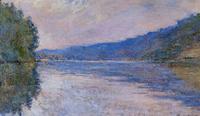
The Seine at Port-Villez
Claude Monet
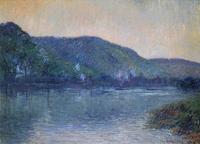
Boats on the Seine at Oissel
Gustave Loiseau
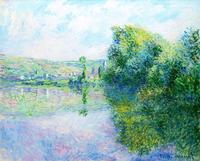
The Siene at Vetheuil
Claude Monet
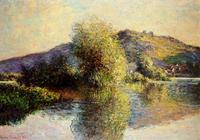
Isleets at Port-Villez
Claude Monet
The Seine and the Chaantemesle
Claude Monet
The Seine and the Chaantemesle Hills
Claude Monet
The Seine at Port-Villez
Claude Monet
The Seine at Port-Villes, Clear Weather
Claude Monet
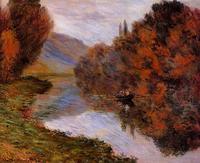
Rowboat on the Seine at Jeufosse
Claude Monet
Banks of the Seine in Summer, Tournedos sur Seine
Gustave Loiseau
Landscape at Port-Villez
Claude Monet
River in Autumn
Gustave Loiseau
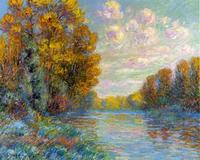
The River in Autumn
Gustave Loiseau
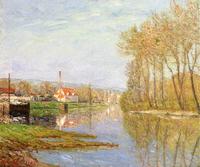
March Sunlight, Port-Marly
Maxime Maufra
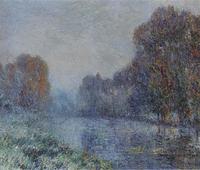
By the Eure River Hoarfrost
Gustave Loiseau
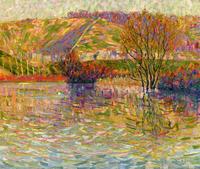
The coast at Haute Isle
Auguste Herbin
Trees in Bloom
Gustave Loiseau
Landscape Around Mantes
Maximilien Luce