
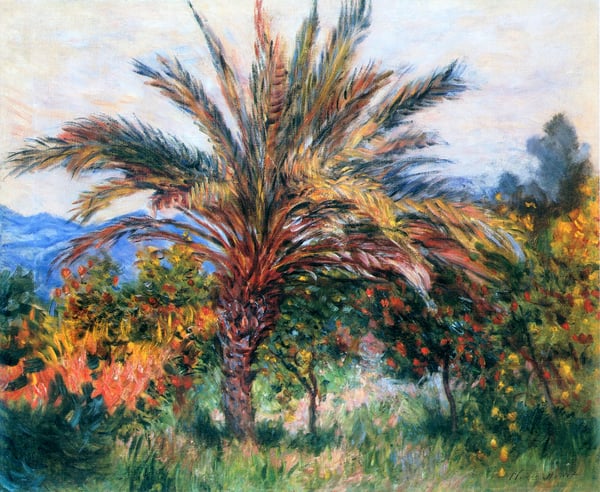
Экспертный разбор работы «Palm Tree at Bordighera» художника Claude Monet
Стиль: Impressionism · Жанр: landscape
Expert Analysis: "Palm Tree at Bordighera" by Claude Monet
As a work of Impressionism, Claude Monet’s Palm Tree at Bordighera stands out for its bold departure from the artist’s more familiar depictions of the cool, grey-green landscapes of northern France. Painted in 1884 during a sojourn on the Italian Riviera, this landscape captures the intense Mediterranean sunlight and the exotic flora that had never before appeared in Monet’s oeuvre.
Significance within Impressionism:
-
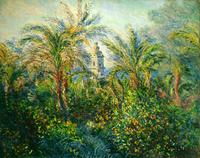
Subject and Light: Monet was drawn to the challenge of rendering the saturated colors of the South—the deep blue of the sea, the hot pink and orange tones of the buildings, and the sharp, dark silhouettes of the palm fronds against a luminous sky. The painting’s true subject is not the palm tree itself but the scintillating vibration of light and atmosphere. This aligns with Impressionism’s core mission: to record the transient effects of natural light on a scene.
-
Brushwork and Color: The canvas is alive with rapid, separate dabs of pure color—a hallmark of Impressionist technique. The palm’s fronds are not drawn with precise outlines but are suggested through streaks of deep green, turquoise, and violet, while the background dissolves into shimmering patches of warm ochre and cerulean. This execution demonstrates Monet’s growing interest in “en plein air” spontaneity and his willingness to sacrifice literal representation for sensory immediacy.
-
Expansion of the Impressionist Canon: Most Impressionists focused on Parisian parks, riverbanks, or Normandy coastlines. Monet’s decision to paint a tall, exotic palm tree—a motif more associated with Romantic Orientalism or later Post-Impressionist “primitivism”—was radical. It tested the boundaries of how Impressionist light could animate a non-native, structurally dramatic subject. The work anticipates his later series (e.g., the Poplars, the Haystacks) by proving that any object, even a palm, could be a vehicle for studying light.
Historical Context: Painted during a period of financial difficulty and personal grief (his wife Camille had died five years earlier), the Bordighera canvases reveal a reinvigorated artist experimenting with intensified color and exotic motifs. The palm tree—an emblem of the “South”—allowed Monet to shift from the atmospheric grays of his earlier work toward the high-keyed, almost Fauvist palette that would influence later modernists.
In sum, Palm Tree at Bordighera is significant as a critical pivot point: it shows Monet not as the painter of misty reflections, but as a daring colorist unafraid to embrace the alien, the hot, and the brilliantly foreign—all while remaining steadfastly loyal to the Impressionist pursuit of light’s endless transformations.
Museum / Gallery
Визуально похожие
20 работ с близкой композицией и палитрой
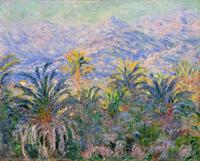
Palm Trees at Bordighera
Claude Monet
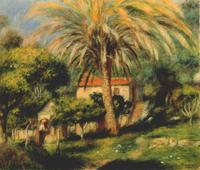
The palm tree
Pierre-Auguste Renoir
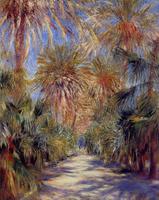
Algiers, the Garden of Essai
Pierre-Auguste Renoir
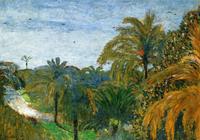
Garden in Cannes
Edouard Vuillard
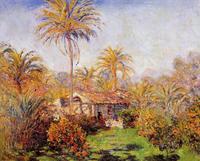
Small Country Farm in Bordighera
Claude Monet
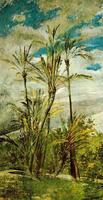
Fifth mural tempera from the villa "La Falconiera"
Giovanni Boldini
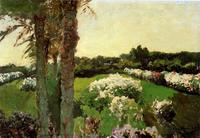
Malvarrosa, Valencia
Joaquín Sorolla
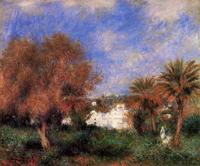
The Garden of Essai in Algiers
Pierre-Auguste Renoir
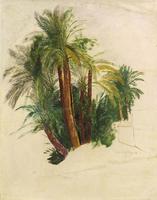
Study of palm trees
Edward Lear
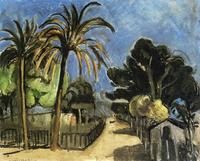
Untitled
Henri Matisse
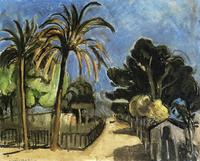
Landscape
Henri Matisse
Garden in Bordighera, Impression of Morning
Claude Monet
North Africa
Nathaniel Hone the Younger
Specimens of the Coquito Palm of Chile in Camden Park, New South Wales
Marianne North
A door/ Northern Sudan
Iman Shaggag
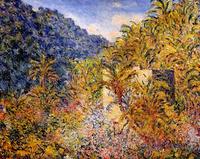
The Valley of Sasso
Claude Monet
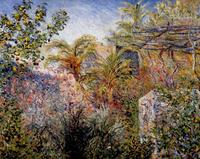
The Valley of Sasso, Bordighera
Claude Monet
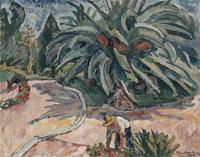
South of France. Palma.
Pyotr Konchalovsky
UNTITLED (LANDSCAPE)
Rashid Al Khalifa
Berény Róbert, Horgász a Dunaparton
Berény Róbert