
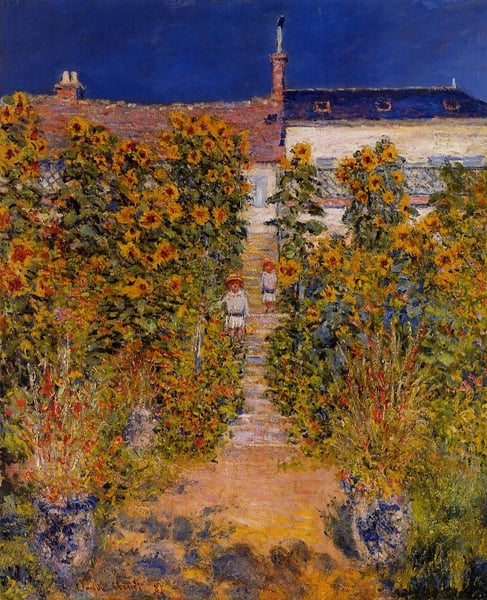
Expert analysis of Claude Monet’s The Artist's Garden at Vetheuil
Style: Impressionism · Genre: genre painting
This analysis considers "The Artist's Garden at Vetheuil" by Claude Monet as an exemplary work of Impressionism.
Artist: Claude Monet
Title: The Artist's Garden at Vetheuil
Style: Impressionism
Genre: Genre painting (domestic scene)
Expert Analysis
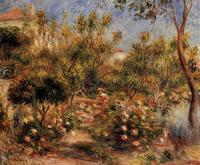
The Artist's Garden at Vetheuil is a quintessential Impressionist work that captures the transient beauty of a private garden in the town of Vetheuil, where Monet lived from 1878 to 1881. The painting’s significance lies in how it embodies the core Impressionist ambitions: to record the shifting effects of light and atmosphere, and to elevate a humble domestic subject to a realm of pure sensory experience.
As a genre painting, it depicts an everyday moment—a garden path, flowering plants, and a sunlit lawn—yet Monet transforms this ordinary scene through his revolutionary technique. He applies paint in rapid, broken brushstrokes of pure, unmixed color (e.g., vivid pinks, yellows, and greens) that optically blend when viewed from a distance, capturing the shimmer of sunlight on leaves and the dappled shadows beneath. The composition is deliberately asymmetrical, leading the eye along a curving path that draws the viewer into the intimate space of the garden, while vertical flower stalks and the house’s roofline anchor the scene.
This work is significant for several reasons:
-
The “En Plein Air” Aesthetic: Monet painted directly from life in the garden, a hallmark of Impressionism. The spontaneity of the brushwork conveys a feeling of immediacy, as if the scene were captured in a single fleeting moment of afternoon light.
-
Color as Light: Instead of using black or brown for shadows, Monet employs complementary colors (e.g., blue-violet shadows alongside yellow-orange sunlight), demonstrating the Impressionist understanding that local colors are modified by atmospheric conditions. This creates a vibrant, harmonious palette that feels both natural and intensely personal.
-
Subjectivity and Mood: While the garden is a specific place (Monet’s own), the painting is less a documentary record than a transcription of the artist’s sensory reaction—the warmth of the sun, the rustle of leaves, the stillness of a summer day. This emphasis on personal perception over objective representation is central to Impressionism’s break with academic tradition.
-
Transitional Period: Painted during a time of personal hardship for Monet (his wife Camille was ill, and he was financially strained), the garden becomes a refuge. The painting’s luminosity and cheerfulness contrast with his difficulties, revealing how Impressionism could transform even a troubled moment into a celebration of natural beauty.
In summary, The Artist's Garden at Vetheuil exemplifies Impressionism’s radical shift toward capturing the ephemeral qualities of light and atmosphere. Its significance lies in its direct, unmediated depiction of a simple domestic garden as a site of pure visual delight—a testament to Monet’s belief that the most profound art could be found in the everyday, if one learned to see it anew.
Visually similar
20 works with related composition and palette
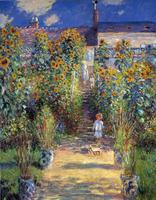
The Artist's Garden at Vétheuil
Claude Monet
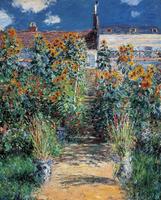
The Garden at Vetheuil
Claude Monet
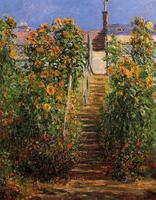
The Steps at Vetheuil
Claude Monet
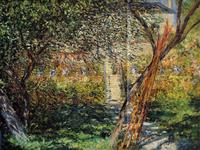
Garden at Vetheuil
Claude Monet
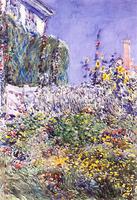
Dexter`s Garden
Childe Hassam
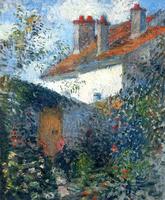
Study at Pontoise
Camille Pissarro
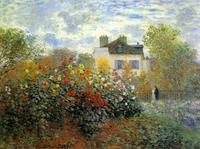
The Garden of Monet at Argenteuil
Claude Monet
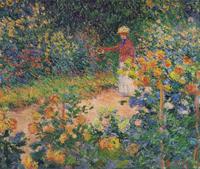
In the Garden
Claude Monet
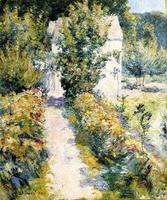
Azaleas
John Henry Twachtman
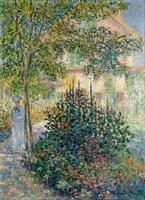
Camille Monet in the Garden at the House in Argenteuil
Claude Monet
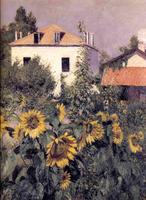
Sunflowers in the Garden at Petit Gennevilliers
Gustave Caillebotte
In a French Garden
Childe Hassam
House in the Country
Gustave Loiseau
Party wall
Paul Gauguin
Flowering Garden
Vincent van Gogh
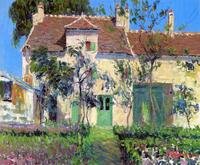
The Garden Behind the House
Gustave Loiseau
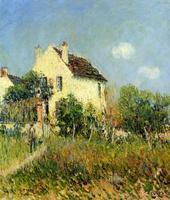
Veslez
Gustave Loiseau
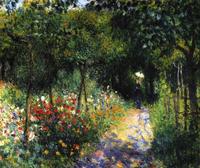
Woman at the Garden
Pierre-Auguste Renoir
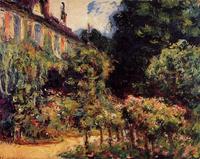
The Artist's House at Giverny
Claude Monet
Young Woman in a Garden Cagnes
Pierre-Auguste Renoir