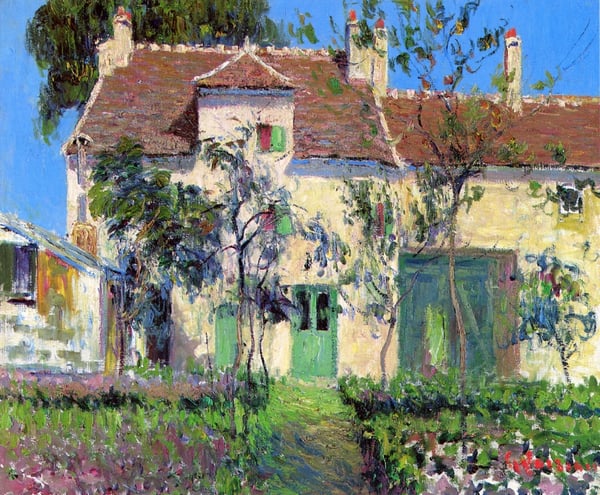
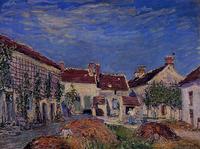
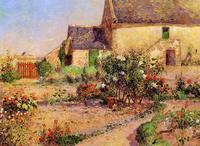
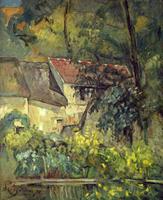
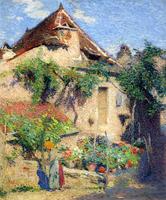
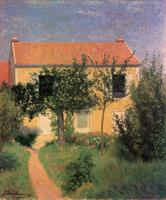
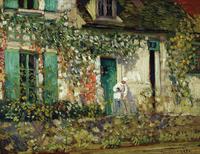
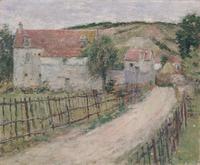
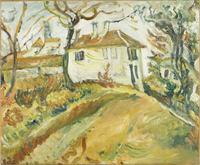
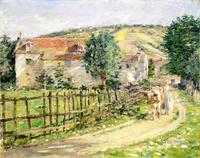
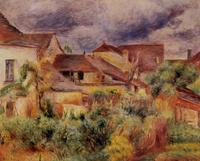
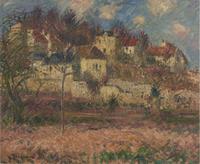
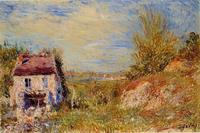
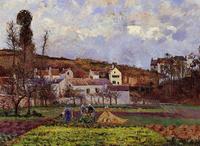
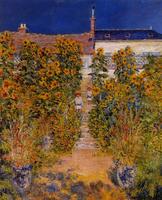
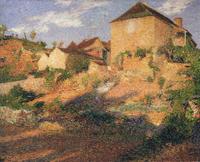
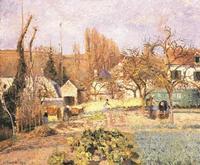
Based solely on the supplied facts, the significance of Gustave Loiseau’s "The Garden Behind the House" within the Post-Impressionist style lies in its focus on an intimate, domestic landscape rather than grand vistas or urban scenes. As a Post-Impressionist landscape, the work would be expected to move beyond the Impressionist concern with fleeting light and naturalistic color, instead employing more deliberate, personal expression through composition and brushwork. The subject—a garden behind a house—suggests a private, everyday space, typical of the period's interest in finding deeper emotional or structural resonance in the ordinary. In the context of Loiseau’s known contemporaries, such a painting would exemplify how Post-Impressionist landscape artists often used enclosed, familiar views (like a garden) to experiment with surface texture, rhythmic patterns, and a more synthesized sense of color, elevating a simple genre scene to a vehicle for formal innovation.